 DIXIE GENSExplore the family
I started this because I missed my mamaw.
On September 15, 2026, I read Ola Inez Jacobs Tucker’s obituary again. Four years had passed since we lost her. I knew the woman who made a home with Papaw Olis Creed Tucker Sr. in Tellico Plains. I knew the family gathered around her. But the names behind her name, the people who had lived and died before I could know them, were another matter.
I began looking for them.
When I last wrote this story, the register held 159 direct ancestors. Today it holds 229, reaching twenty generations back. The work has taken me from Tennessee courthouses and Georgia church books to a medieval field in Suffolk. I have looked at wills written centuries before there was a United States and found the relationships that eventually led to my own family.
That still stops me cold. A man in an English parish register was once somebody’s little boy. A woman named in a widow’s petition was trying to keep her household together. They could not have imagined me. Yet here I am, looking for them.
Four people at the center of it
However far this goes, I come back to four names: Olis Creed Tucker Sr., Ola Inez Jacobs Tucker, Wilbur Sherman Higgs and Hulda Dean Zorn Higgs. My grandparents are where all this history becomes familiar.
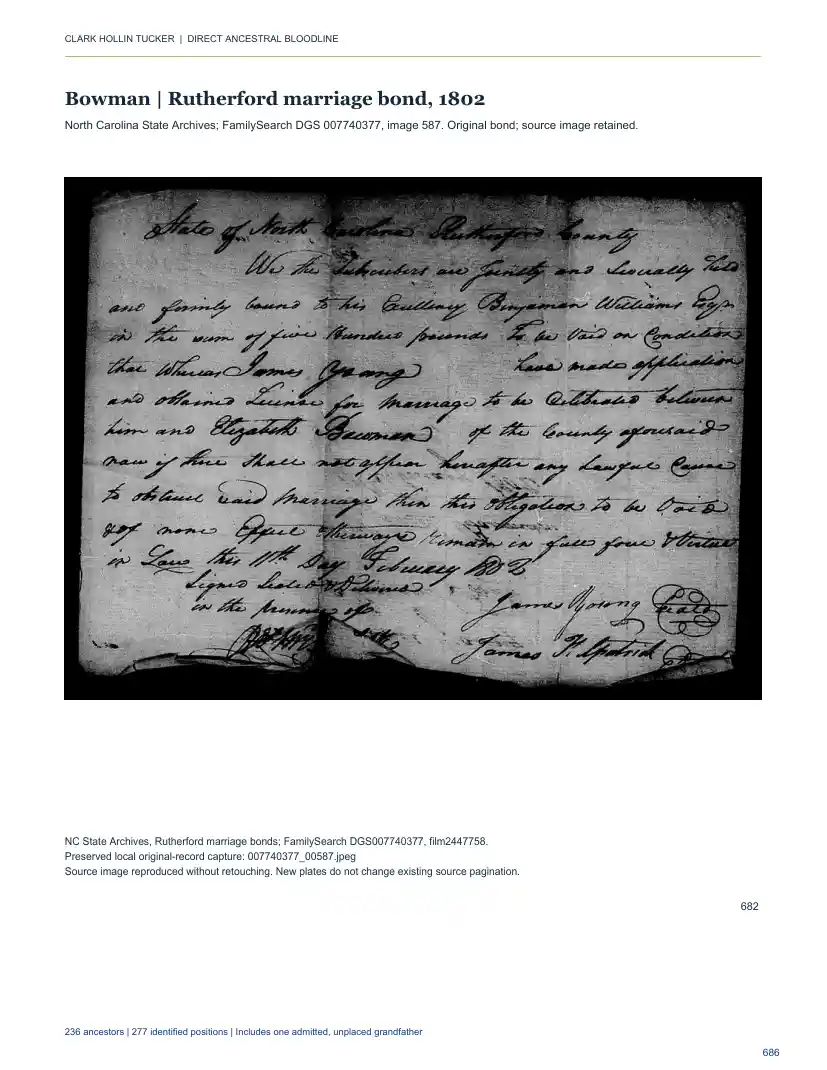
Papaw Creed’s people bring me into East Tennessee and the mountains of western North Carolina and north Georgia. Behind the Tuckers are the Selfs, Hollingsheads, Shaws, Kirklands, Lendermans, Youngs and Bowmans. John J. Tucker and Martha Mitchell were followed by Elisha Tucker and Martha Lavada Self, then Jobe Tucker and Grace Hollingshead, then Papaw Creed. These are the roads into Tellico Plains and Rafter, into the country I love.
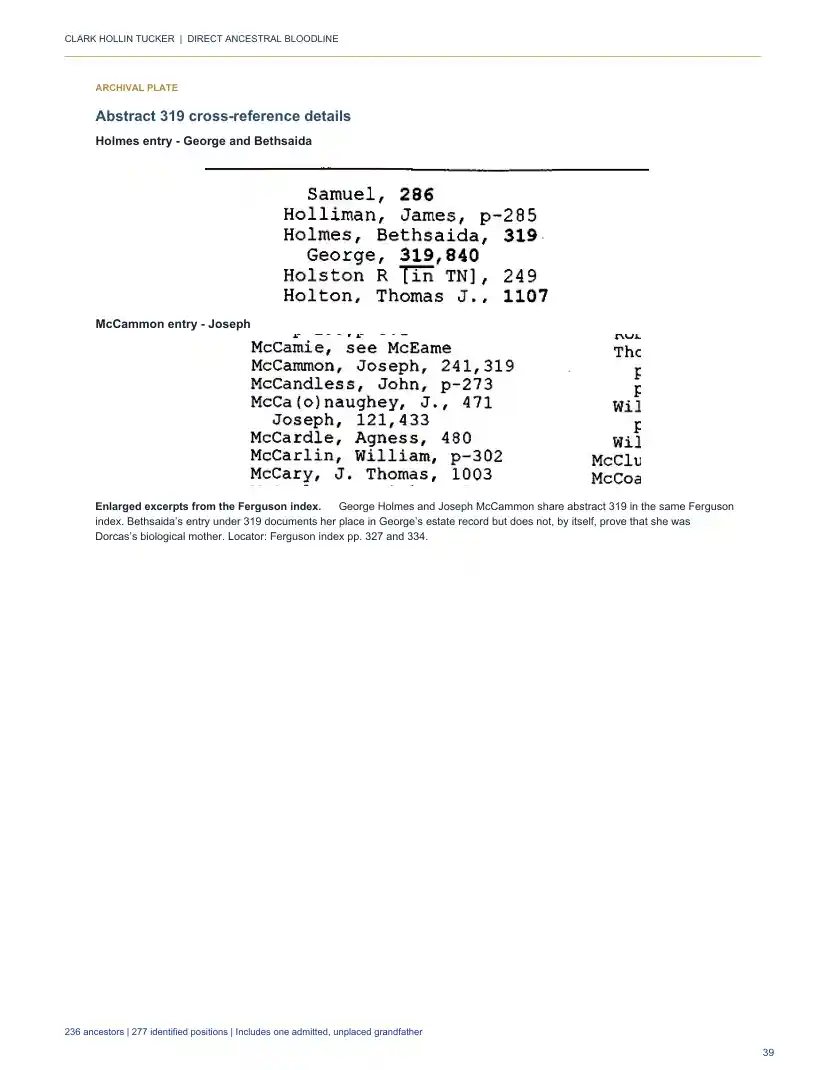
Mamaw Ola’s road came from West Tennessee. Born in Bolivar in 1929, she carried the Jacobs, McCommon, Bryant, Fortune, Bass and Scott families into her marriage with Papaw Creed. That side of the tree has grown considerably. The McDaniel work now places George McDaniel and Isabella Neely behind Jane McDaniel Bryant. The Fortune line reaches Elizabeth Eubank and her father John in Albemarle County, Virginia. Each addition gives more substance to the family Mamaw came from.
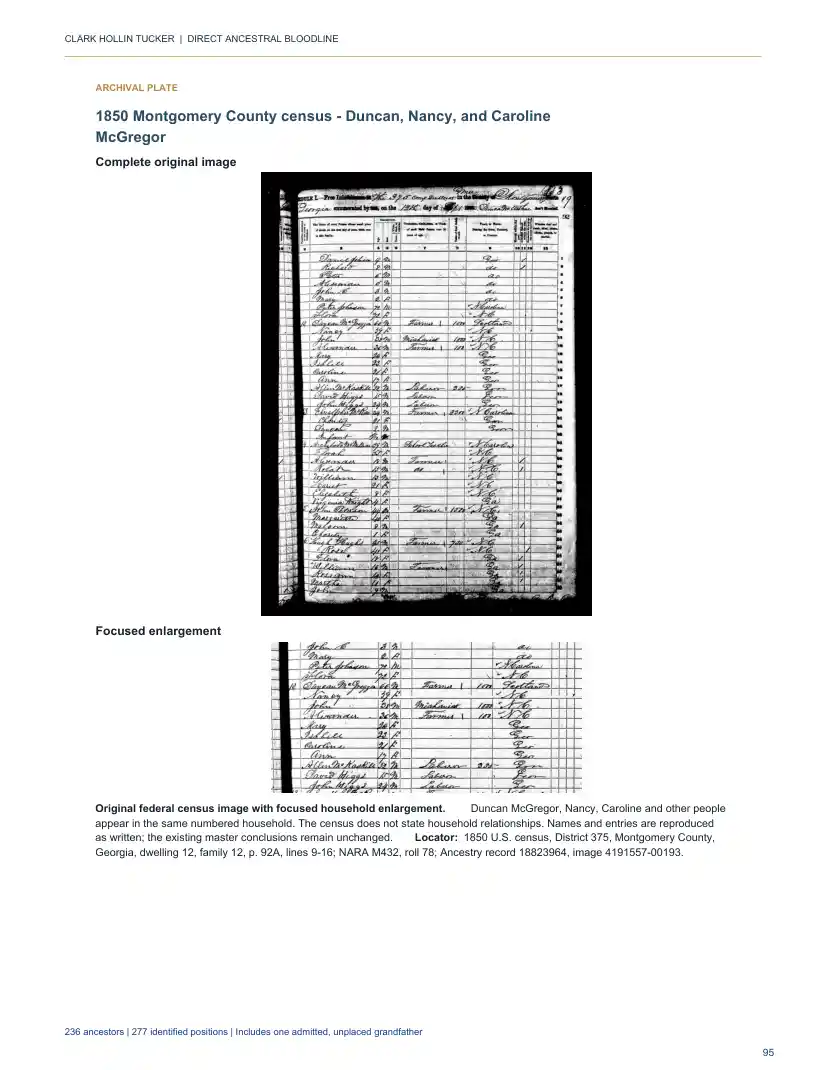
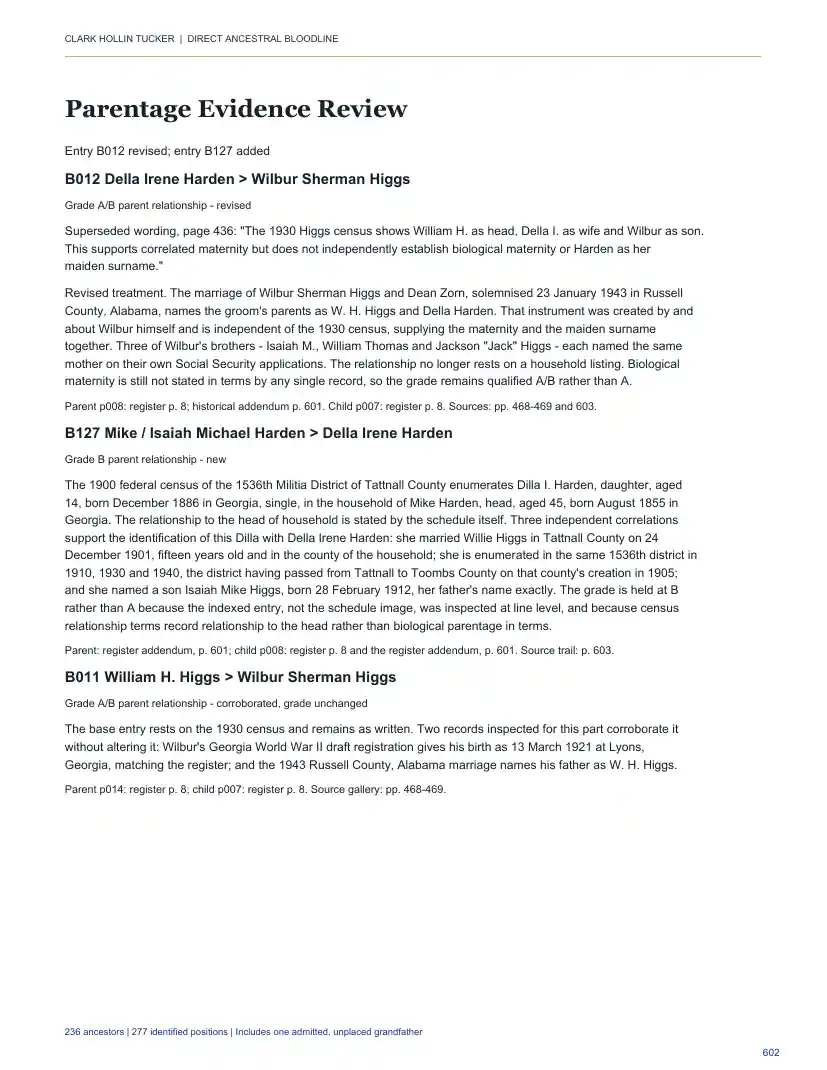
Papaw Wilbur’s branch takes me through the Higgs, Odom, McGregor, Findley and Harden families. Mamaw Hulda’s takes me through the Zorns, Longs, Smarts and Moores, and then into the Bacons and Andrews. Their marriage on January 23, 1943, joined those Georgia families. They made their home in Cleveland, Tennessee, where my mother, Jinna Kaye Higgs, grew up.
Mom and Dad, Olis Creed Tucker Jr., brought those four roads together. I was born in Chattanooga. That is the near end of a much longer story.
Finding my mamaws in the records
Some of the hardest people to recover have been the women. A surname changes at marriage. A wife outlives one husband and marries another. A census gives an initial where I need a name. A later record remembers her only through one of her children.
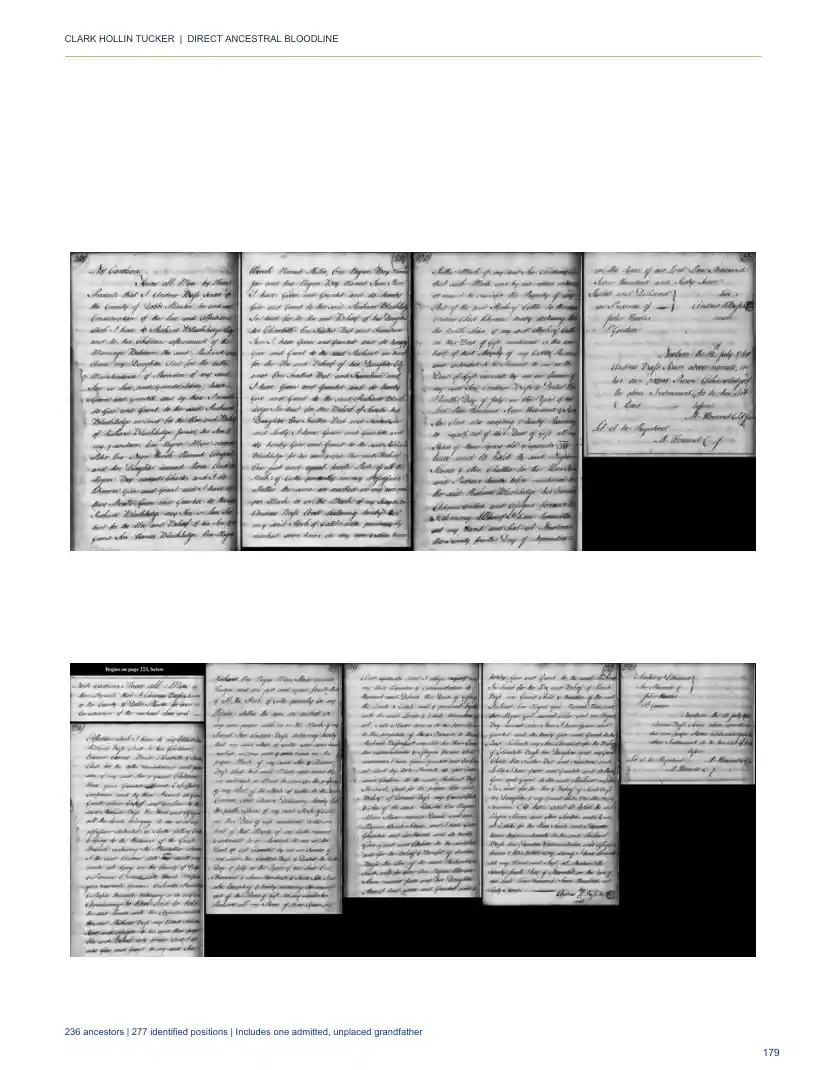
Mary Ann Bacon Moore is a good example. Her place in Mamaw Hulda’s line connects the Moores and Smarts to the Liberty County Bacon family. An 1825 gift and companion release identify Mary Ann as Eliza Delegal’s daughter and William Moore’s wife. Following that household through later land and family records brings the earlier woman into the story of Laurania Moore Smart. Without keeping those women straight, the whole route into the Bacon family would be a jumble of husbands’ surnames.
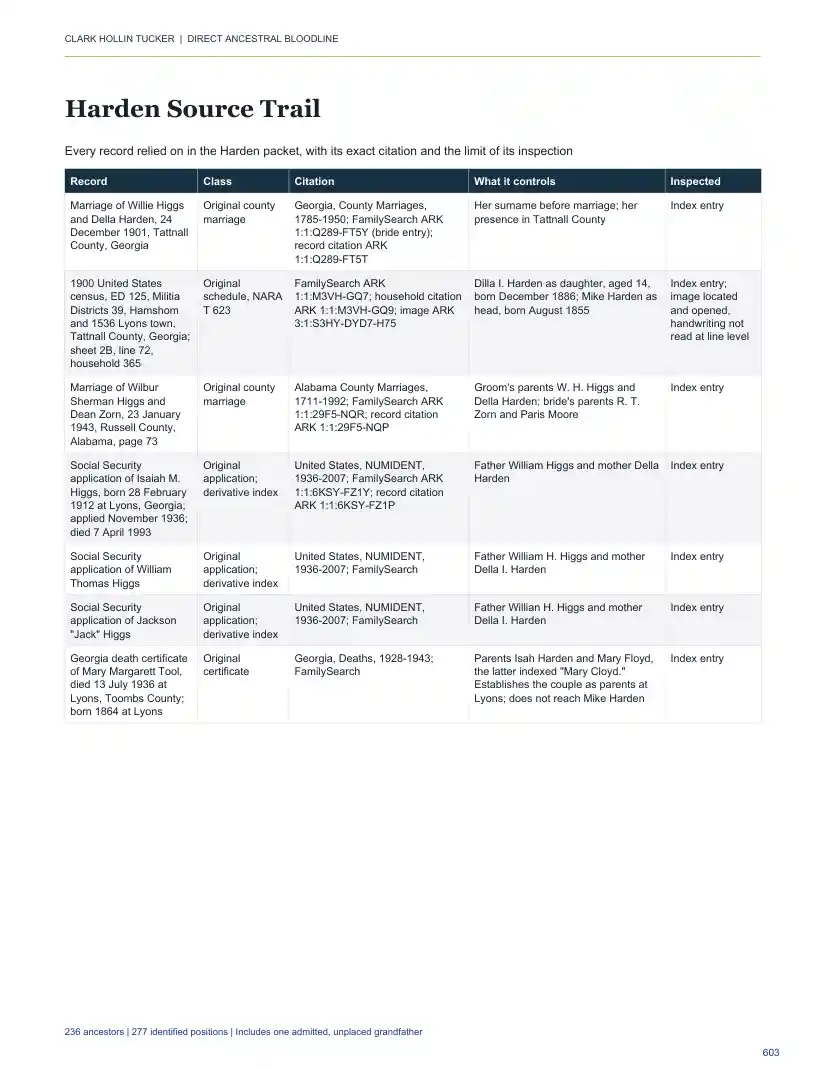
The same patient work has filled in more of the Harden, Ganey and Clifton families on Papaw Wilbur’s side. Della Irene Harden’s mother, Elizabeth, now has her place in the register. Mary Ann Ganey Harden and Martha Clifton Ganey connect that branch to earlier Georgia households. William and Elizabeth Clifton are there too. They deserve to be remembered as people in their own right, not left at the edge of a page while the men take up all the room.
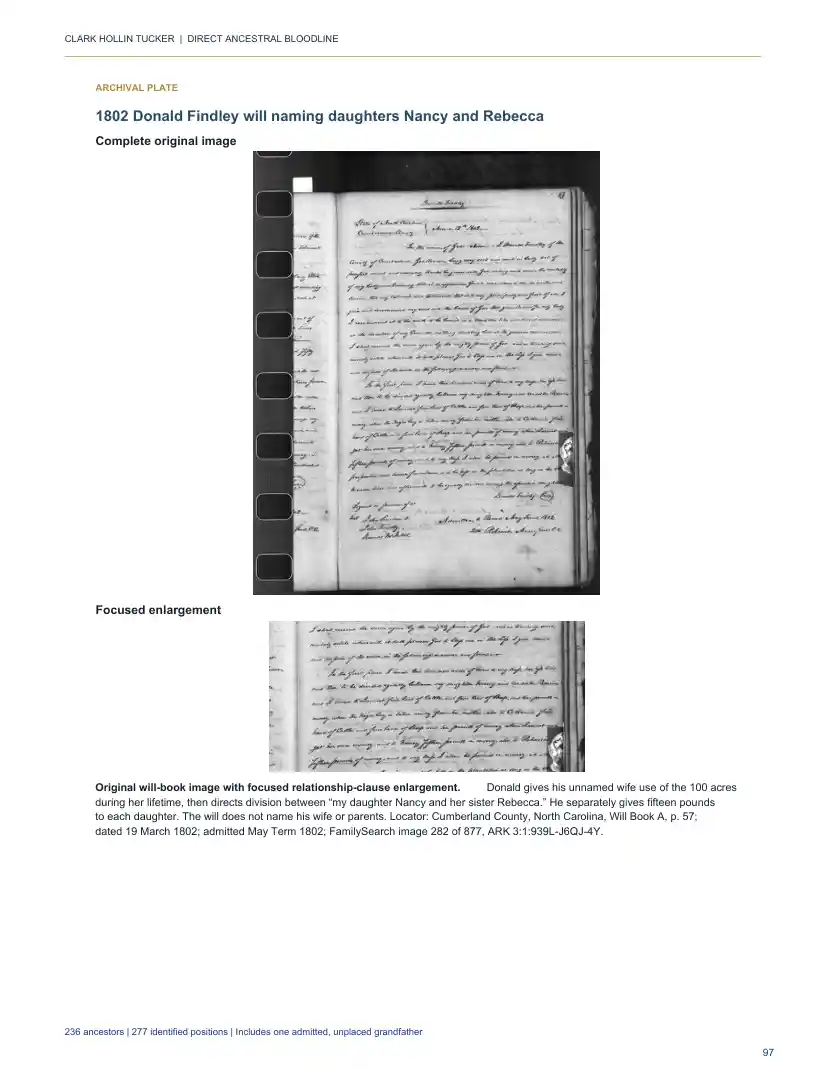
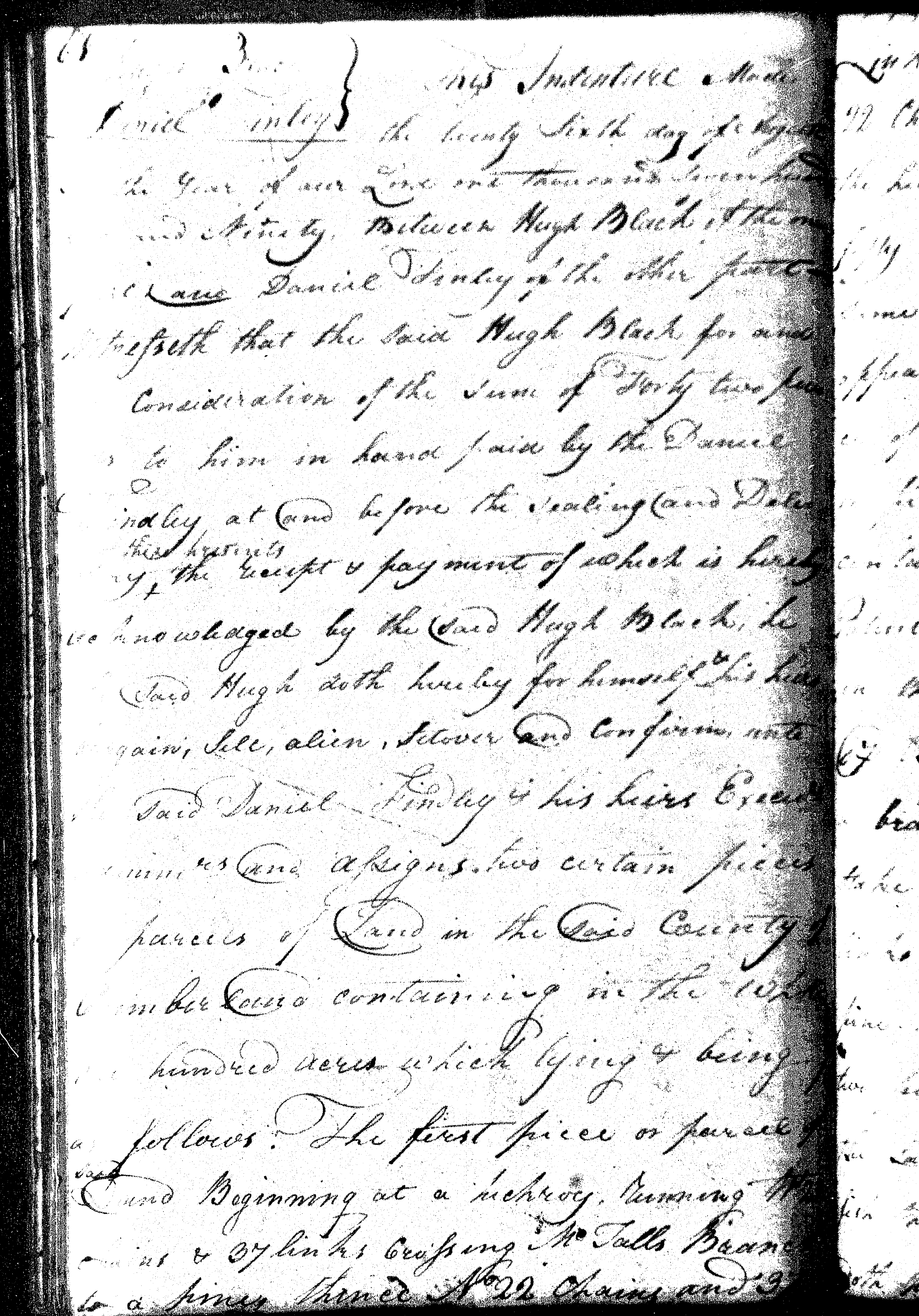
Nancy Findley McGregor leads back to Donald Findley in Cumberland County, North Carolina. In that investigation, a will and successive deeds had to be read together. Land could carry a family connection across a change of surname when a single record could not tell the whole story.
I have learned to pay attention to the small things: a daughter’s married name, a widow’s share, the neighbors on a deed, who received the same piece of land years later. Sometimes that is where a mamaw has been waiting all along.
The day the trail crossed the Atlantic
The Bacon discoveries changed the scale of this project.
The route begins close enough to follow through Georgia: Mamaw Hulda’s Long, Smart and Moore ancestry reaches Mary Ann Bacon Moore and the Midway families. From Samuel Bacon Sr., the line continues through Michael Bacon of South Carolina, Michael of Billerica, Michael of Woburn and Michael of Dedham. Keeping those Michaels apart took far more than finding the same name in another town.
A South Carolina memorial from 1733 records Joseph Bacon’s reference to “my Father Michael Bacon” and land inherited through his father’s will. Joseph’s later Georgia will names Samuel among his brothers. The executor’s sale connects the Georgia estate with Joseph’s South Carolina property. Those records, read together, support the link back from Samuel.
Then came the 1717 power of attorney. Michael Bacon of Dorchester, Carolina, appointed Joseph Lord to collect from the estate of “my father Michael Bacon late of Billerica.” There, in a recorded legal instrument, was the connection between Carolina and Massachusetts.
Earlier deeds and wills carried the investigation farther. Father and son appear together. An uncle Daniel helps distinguish one household from another. The Dedham will names Michael, Daniel and John. Ordinary family business became the means of following the line across places and generations.
And then I was looking at England.
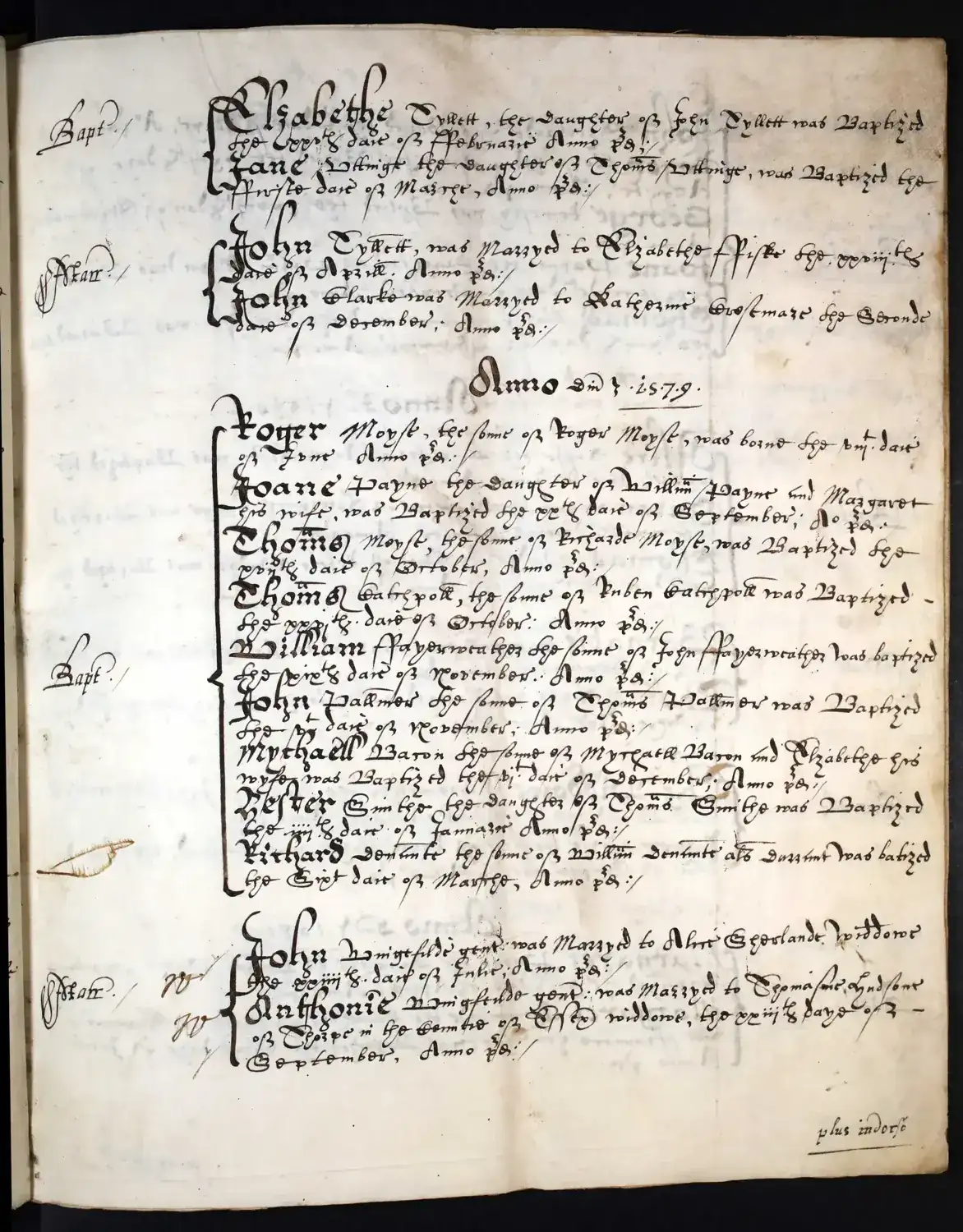
The Winston parish register records Mychaell, son of Mychaell Bacon and Elizabeth, baptized on December 6, 1579. The current family reconstruction identifies that child with Michael Bacon of Dedham. The baptism is the recorded event; it is not a recorded birthday. The identification across the ocean rests on the wider family evidence.
I do not know how to make that feel ordinary. An English minister wrote a child’s name in 1579, and more than four centuries later I can follow my family back to him. Recovering that page is one of the most meaningful moments I have had in this work.
Another family behind the Bacon name
Finding Joanna Way Bacon gave Mamaw Hulda’s branch another direction to follow. Her family leads through the Ways and Sumners of Massachusetts and back into Dorset and Oxfordshire. Ten more people now have their places in the register.
This part of the story comes from records read together. Michael Bacon called William Way Jr. his brother-in-law and chose him to help administer his children’s estate. That family connection continued long after the earlier marriage. Combined with the evidence placing Samuel in Michael’s family, it supports Joanna as Samuel’s mother at Grade B. There is no surviving line that simply says, “Samuel, son of Joanna.” I want the strength of the conclusion and the limits of the record kept together.
Their names are Joanna, William and Persis Way, Aaron and Joanna Sumner Way, Henry Way, William and Mary Swift Sumner, and Roger and Joan Franklin Sumner. The two Bacon descent routes bring them to me twice, but each person is counted once. They belong to a family, not a running score.
Before the ocean: Helmingham
England did not turn out to be the end of the search.
The Bacon line leads into Helmingham, Suffolk, through John, Thomas and William, to John Bacown whose will was proved in 1451. The spelling changes as the records change: Bacon, Bacown, Bacoun. The work has to follow the people and their property, not rely on spelling alone.
The earliest admitted man in this branch is John Bacoun, named as a former landholder in a charter dated March 26, 1396. The charter describes a toft, curtilage and croft adjoining William de Lampet’s meadow. That puts a name and a piece of ground at the far end of my present pedigree.
His placement as father of the later John is a Grade B conclusion from the combined property, chronological and local evidence. The charter does not say “this was his son.” I keep the nature of that conclusion with the record. Strong indirect evidence belongs in genealogy, and it deserves to be explained clearly.
With that generation included, the register reaches Generation 20, counting me as Generation 0. Some of these English ancestors occur twice in the pedigree because two branches of the Bacon family come back to the same earlier people. They are counted once as individuals. The repeating numbers describe two routes through the family; they do not create two different papaws.
What moves me about Helmingham is how local it is. The documents concern a meadow, a house, a lane, a holding passed on. The people at the distant end of my family were occupied with the same basic questions as people anywhere: where they would live, what they could leave their children, and who would look after things when they were gone.
Richard Wythe’s own words
The Wythe discoveries opened another part of that Suffolk family. Elizabeth Wythe married Michael Bacon at Helmingham on November 18, 1565. Her father was Richard Wythe. The register now includes Richard and Joan, John and Margaret Wythe, and the elder John and Alice: six more people with places in the family.
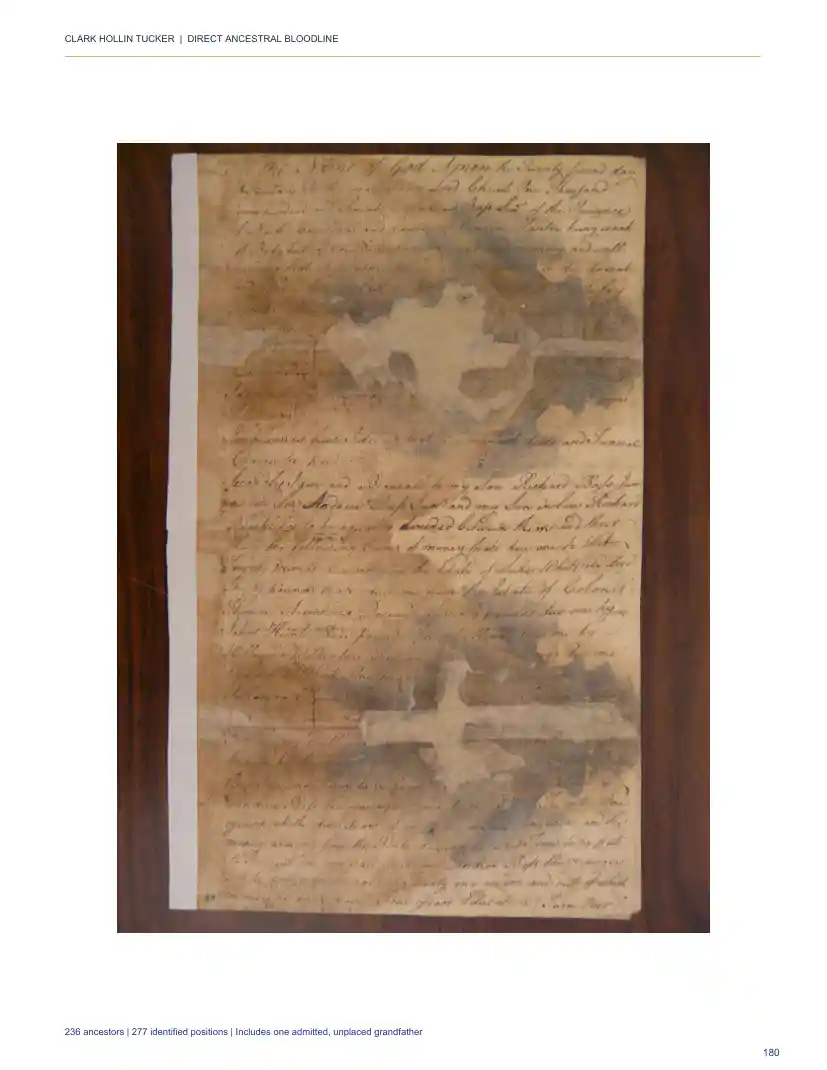
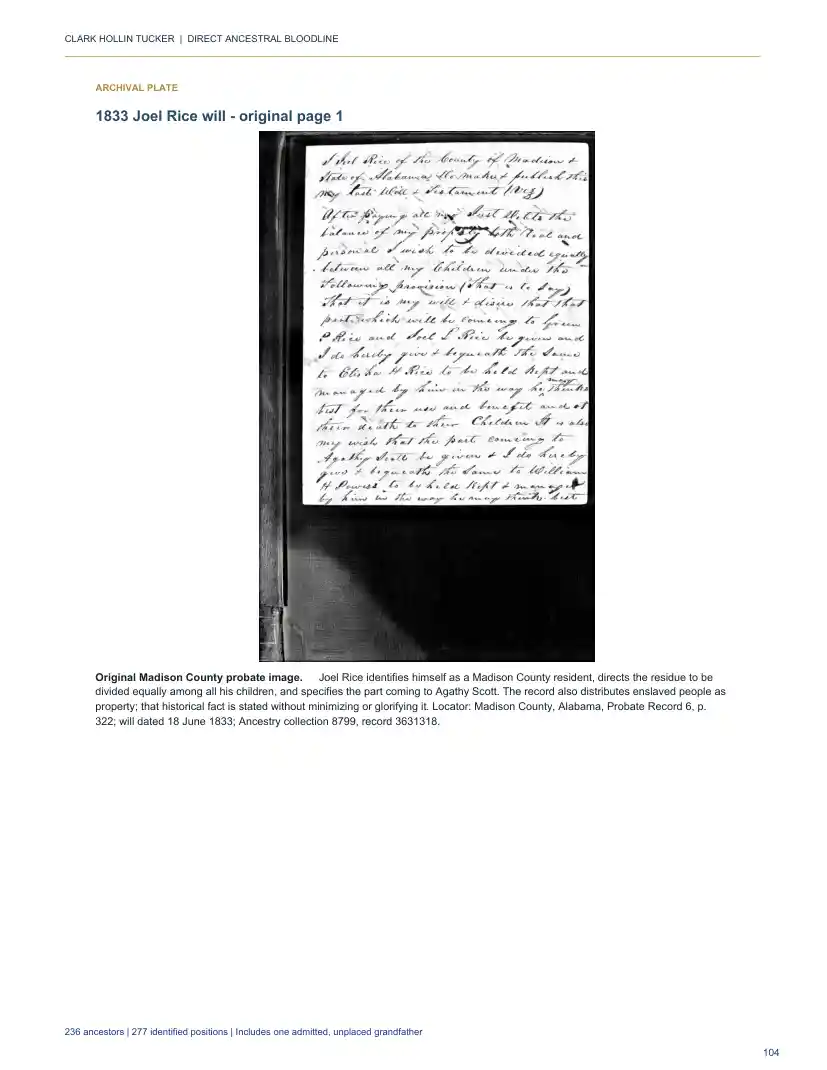
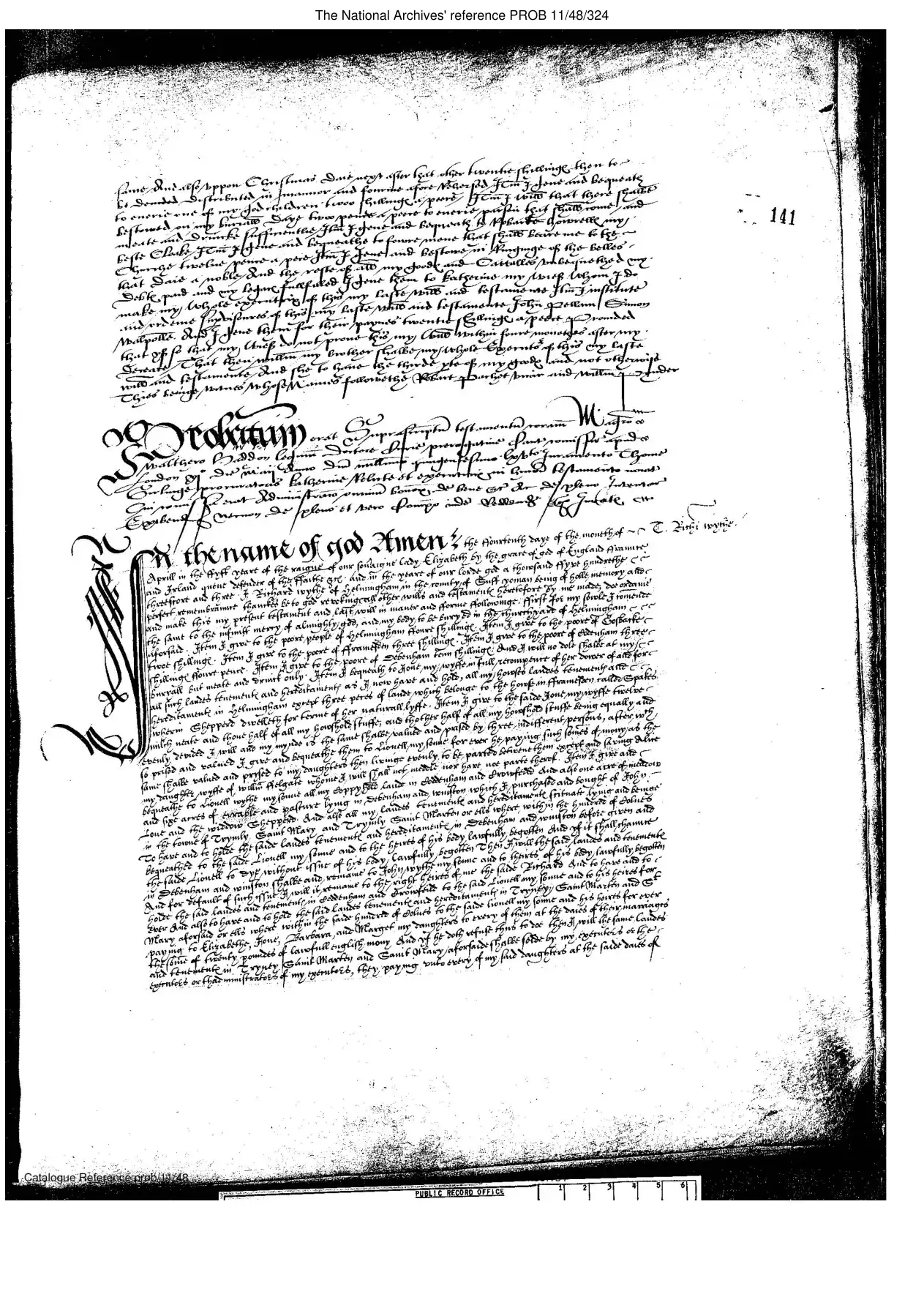
Richard’s original Prerogative Court of Canterbury will is one of the documents I value most in this entire collection. I obtained it from The National Archives. It was written on April 14, 1563, and proved on December 13, 1565.
The will names his wife Joane and his children, including Elizabeth. The parish marriage and the family’s Felgate connections help identify that daughter as the woman who married Michael Bacon. Richard’s fatherhood now carries Grade A in the register. The distinction matters: I can point to his daughter in his own will, then show the records connecting her to the next household.
Joan’s place is preserved too. She was still living when probate was granted, represented as Richard’s widow and executrix. Her relationship to Elizabeth remains a correlated maternity conclusion. I have no reason to replace her with a more glamorous name or give her parents the records have not established.
A document like this lets the family speak in a way a printed chart never can. Richard was arranging the future of his household. He could not have known that his words would become part of a descendant’s effort to find that household nearly five hundred years later.
Virginia, and the country taking shape
While the English work pushed one branch back into medieval Suffolk, other discoveries gave the early American families more depth.
The Bowmans belong to the James River country. The reconstruction now distinguishes successive Robert Bowmans at Roxdale instead of folding several men into one. Patents, deeds and court testimony separate fathers, sons and brothers. A repeated survey measurement—two roods and twenty-two poles—helped connect transactions involving the same property. That is the kind of detail I would once have passed over without knowing what it could do.
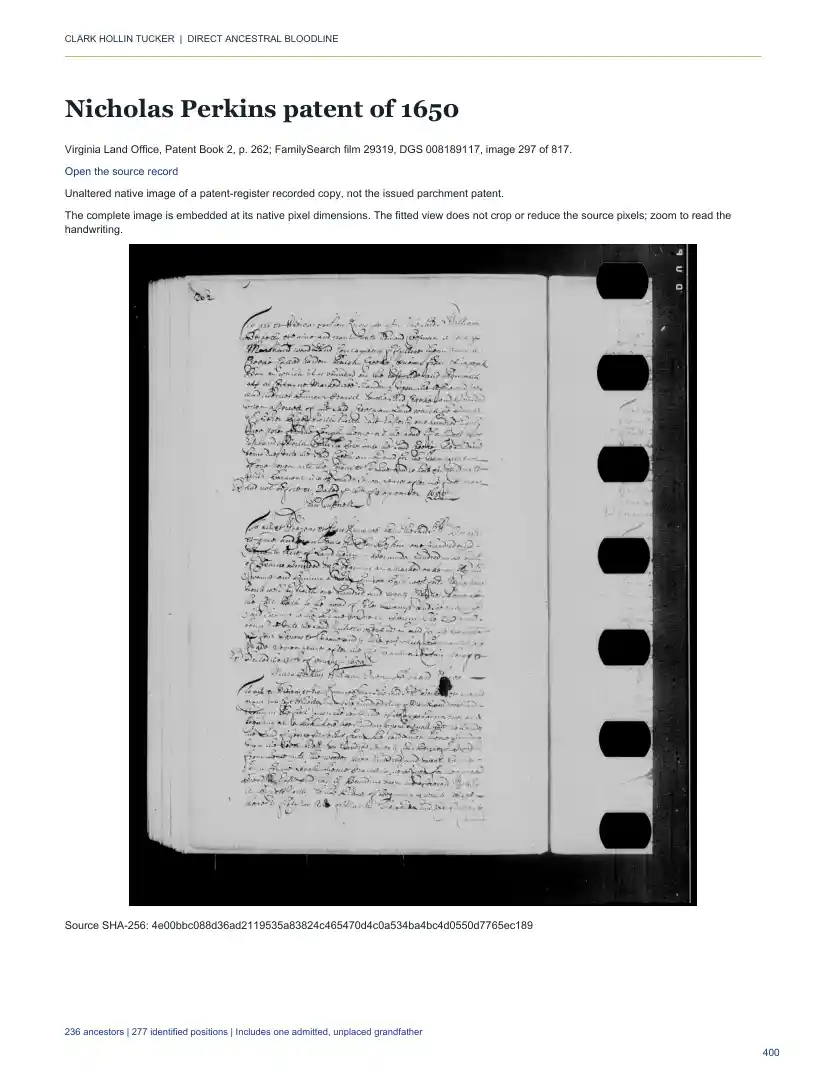
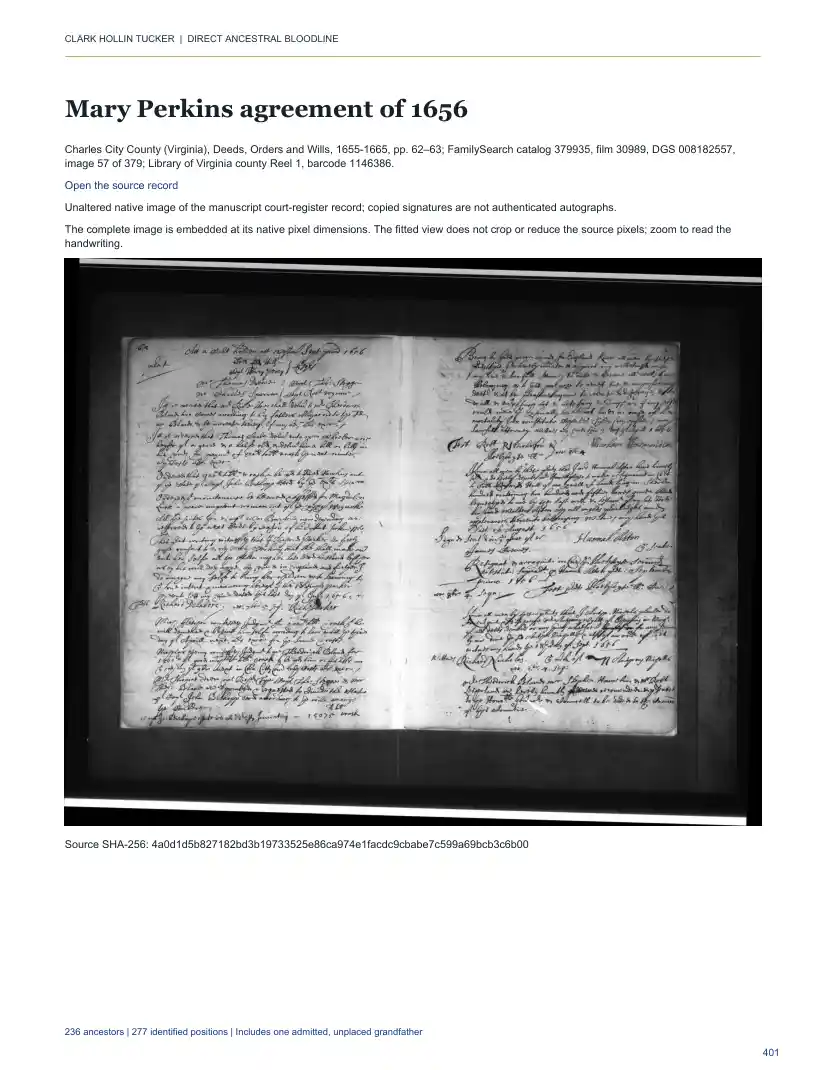
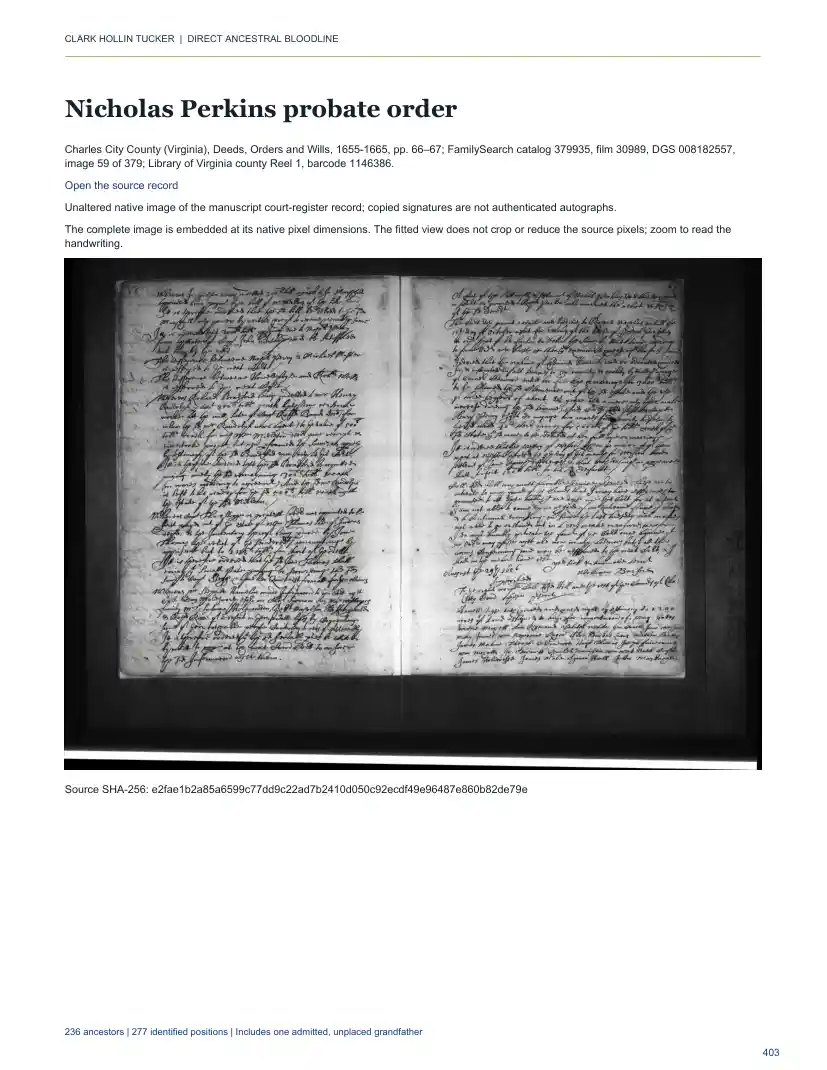
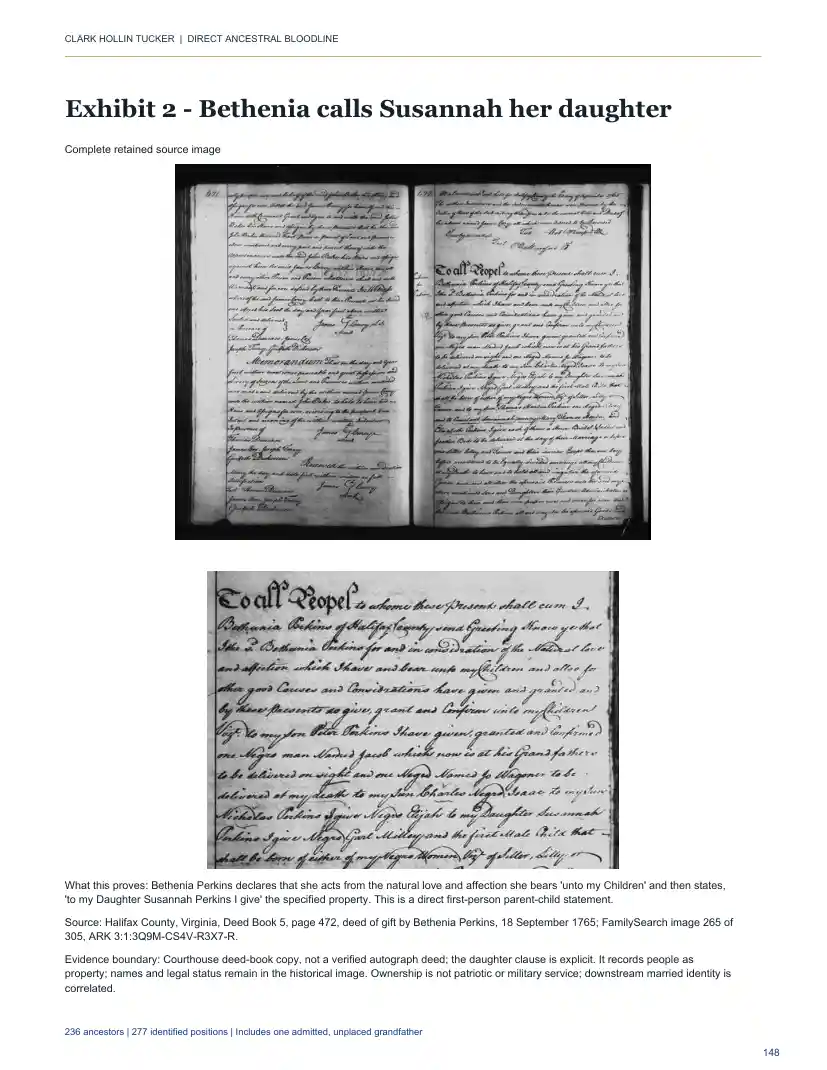
The Perkins records preserve a different household problem. Nicholas Perkins died, his widow Mary remarried, and proceedings concerned the children’s inheritance. The surviving register records young Nicholas choosing a guardian. Behind the formal language was a family adapting to the loss of a father.
Captain John Knowles brings Jamestown into my family history. The House of Burgesses journals record his building obligations and a substantial tobacco bond. His will names daughter Bethenia, through whom this line continues. He belonged to the working world of early Virginia: land, tobacco, houses, debts and children who would inherit the consequences.
Farther south, John Pryor appears in North Carolina public life as a magistrate and legislator. The Perkins family appears around the Dan River, its ferry and its land. These records show the country taking shape at a household scale, one transaction and one obligation at a time.
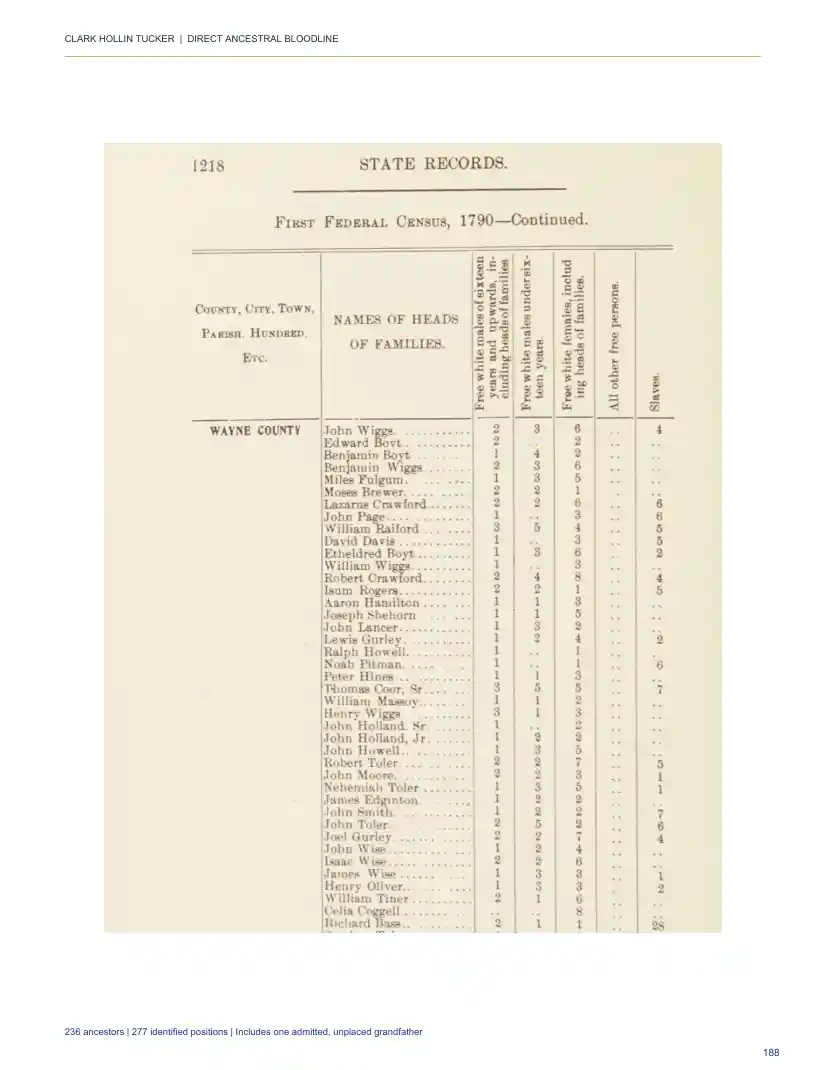
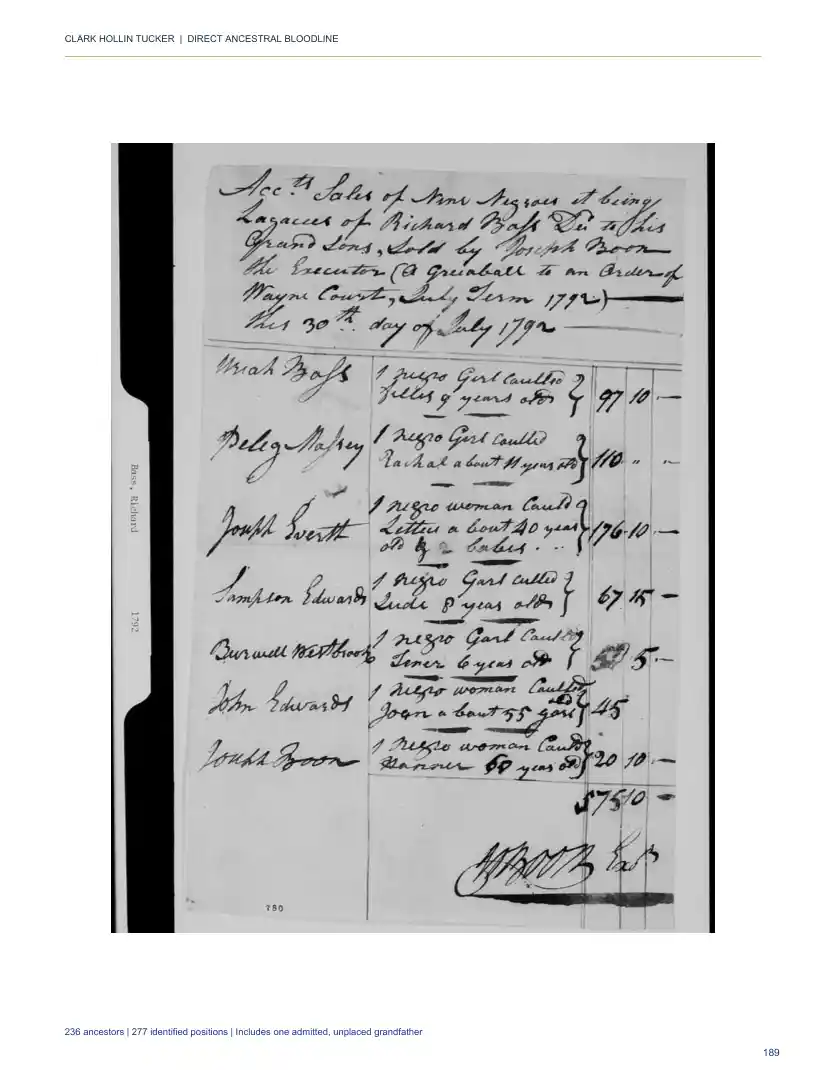
Some of those transactions also record enslaved people. Their names and lives belong with the documents, not outside the story. When a will or deed supplies the proof of my own family relationship, I have to read the rest of the page too.
The service records
As a retired Army major and combat veteran, I pay close attention to the military part of this history. I know there is a difference between belonging to a unit, serving in a campaign and being present in a particular fight. The old records deserve that same care.
The current family register includes ten Revolutionary Patriots. Their contributions include military service, supplies, civil office and other documented support. Joseph McCommon’s certificates record militia service. Samuel Young’s returns preserve his officer service. Richard Bass’s vouchers concern supplies. These are different records of how people supported the Revolution.
William Bowman’s story reaches Cowpens through his son Eli’s sworn pension testimony. Eli recounted his father’s service and reported that he fought under Daniel Morgan. I keep the original declaration with the story so the reader can see both what Eli said and when he said it.
John Yates’s pension account is memorable for its physical detail: marching, hunger, work on a fort and injured feet. During the Kings Mountain campaign he arrived after the battle and helped escort prisoners. His service does not need an invented place in the battle to matter.
The archive also reaches beyond the Revolution. Andrew Bass appears in colonial militia evidence. McLendon Ganey belongs in the Seminole War research, with the surviving index and the limits of the service identification kept together. I want the service recognized at the level the records support.
Each time I recover a service paper, I am looking at someone who had a family waiting elsewhere. The military record and the family record are parts of the same life.
A divided country, a divided family
The Civil War ran through these families in painfully close ways. The register includes seven Confederate veterans and two Union veterans among my direct ancestors.
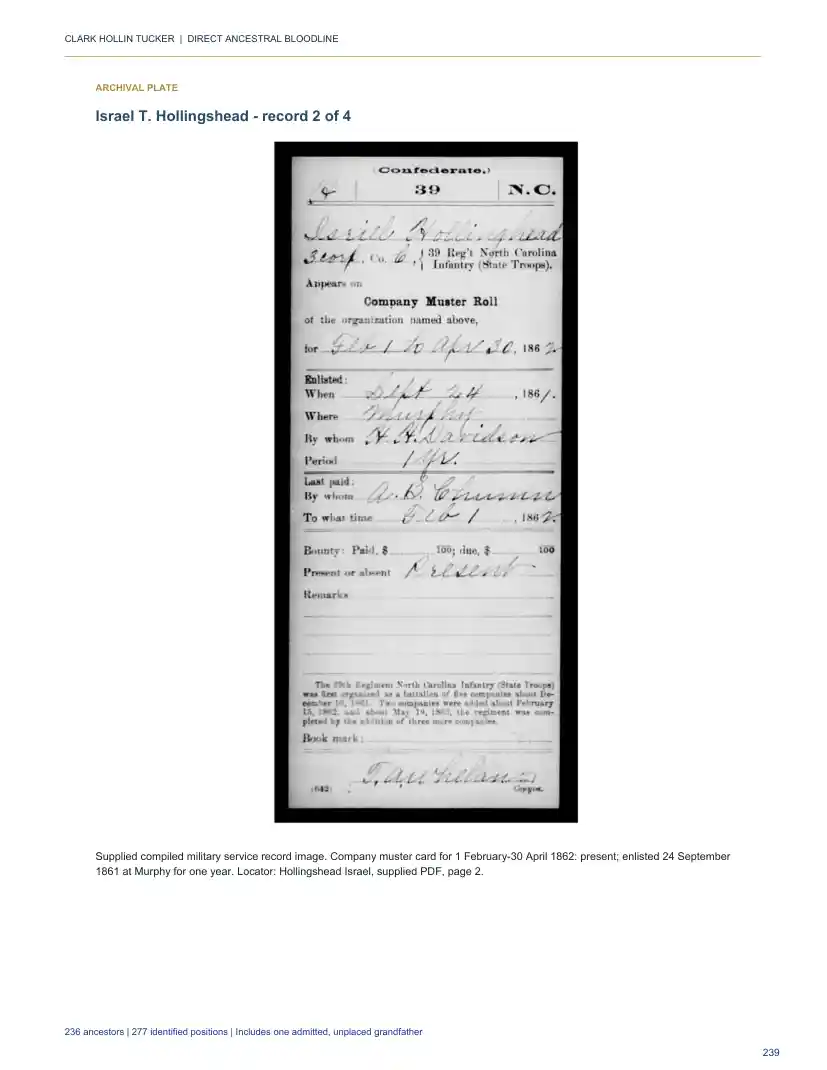
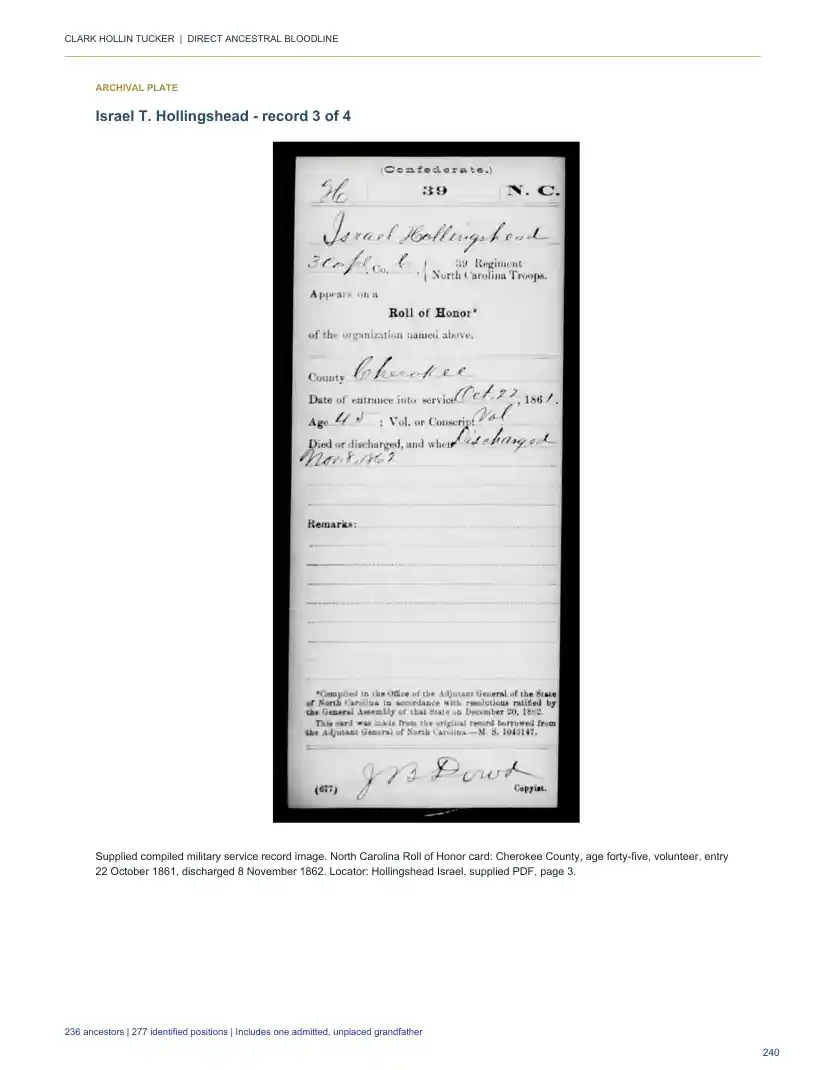
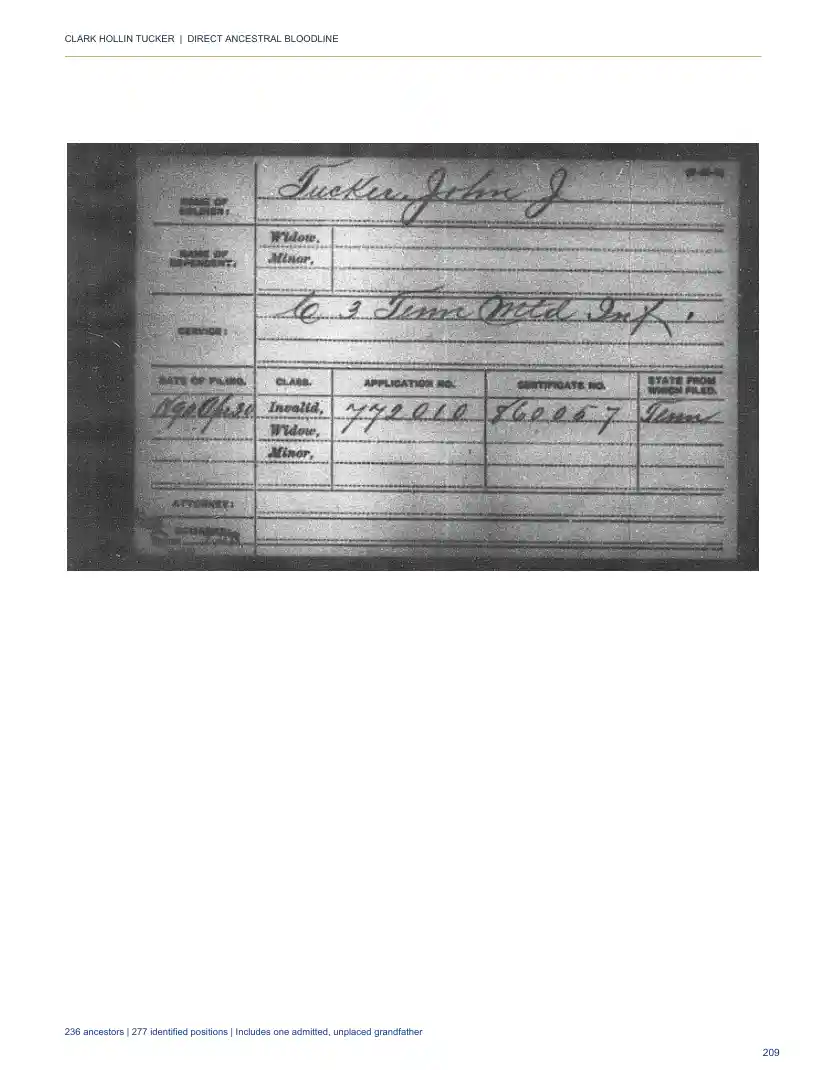
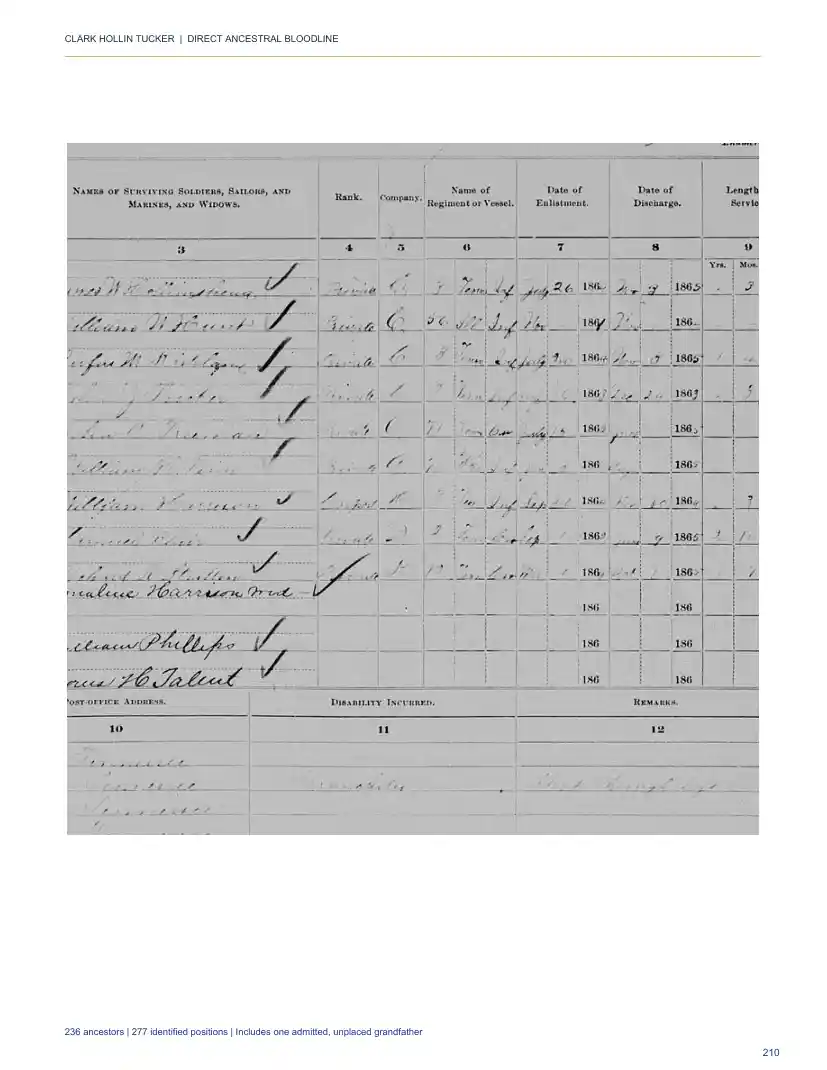
Israel Hollingshead served in the 39th North Carolina Infantry on the Confederate side. His son James Whitten Hollingshead served on the Union side in the 3rd Tennessee Mounted Infantry. John J. Tucker served in that same Union company. Later generations brought those families together.
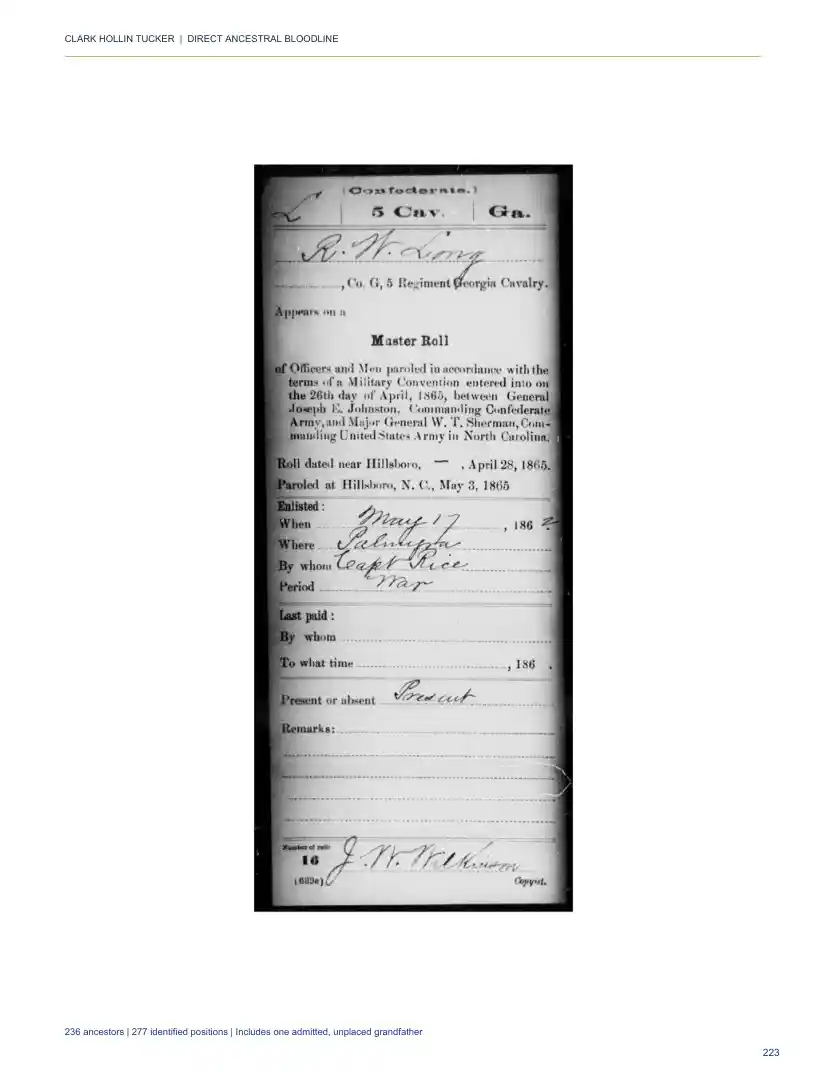
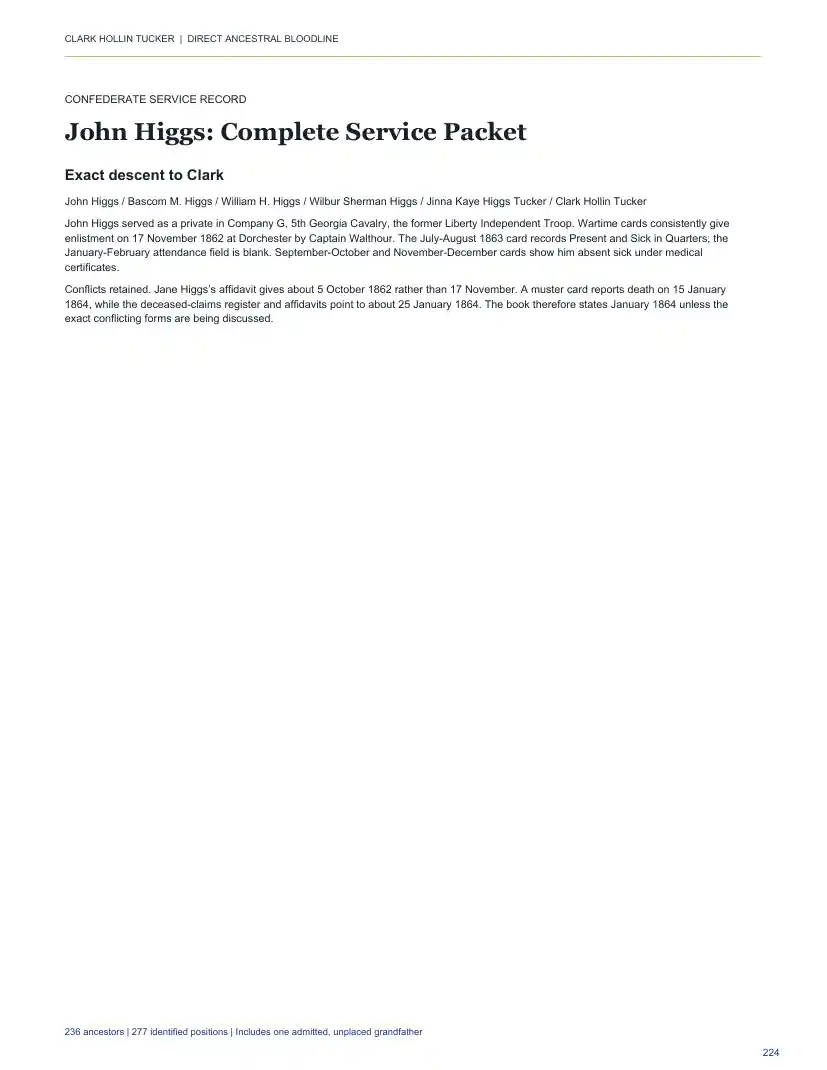
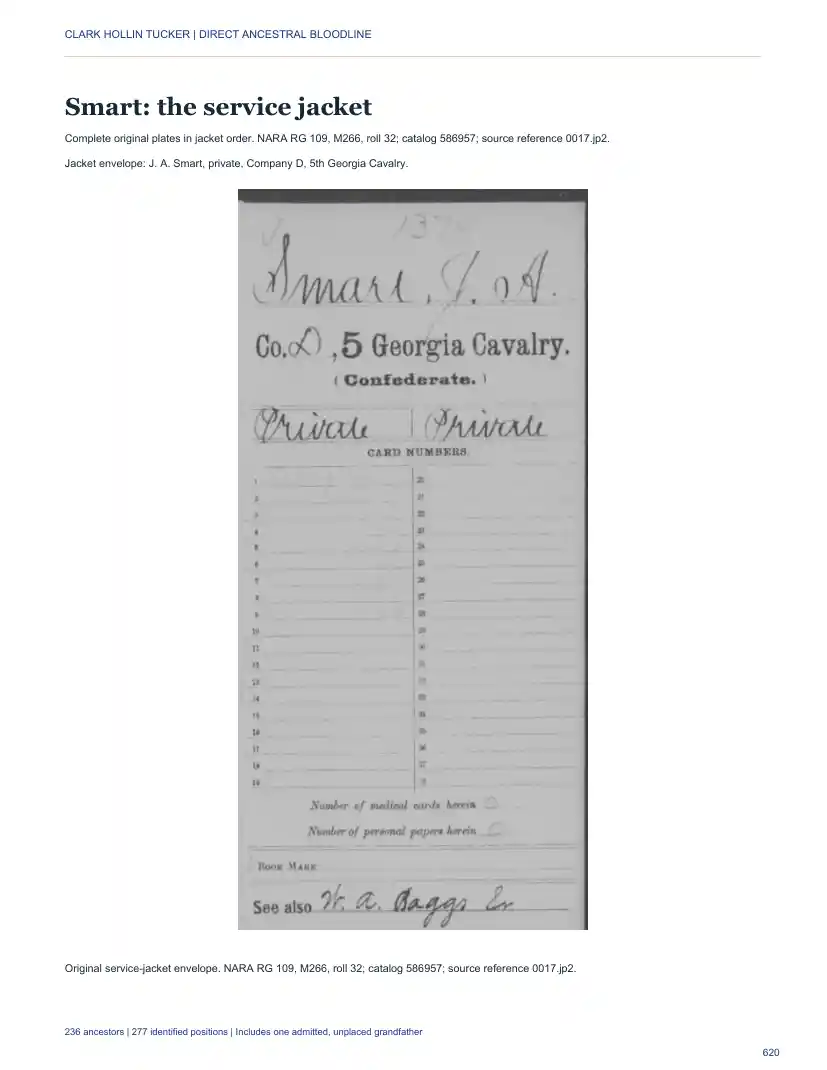
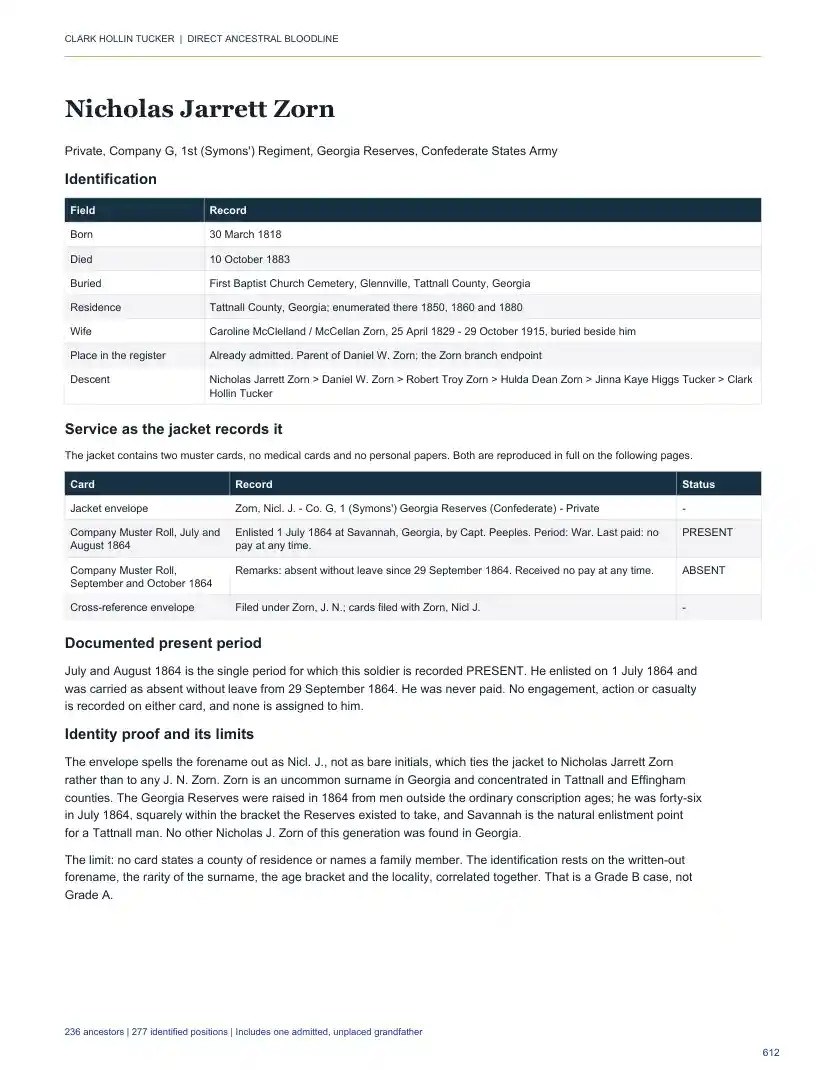
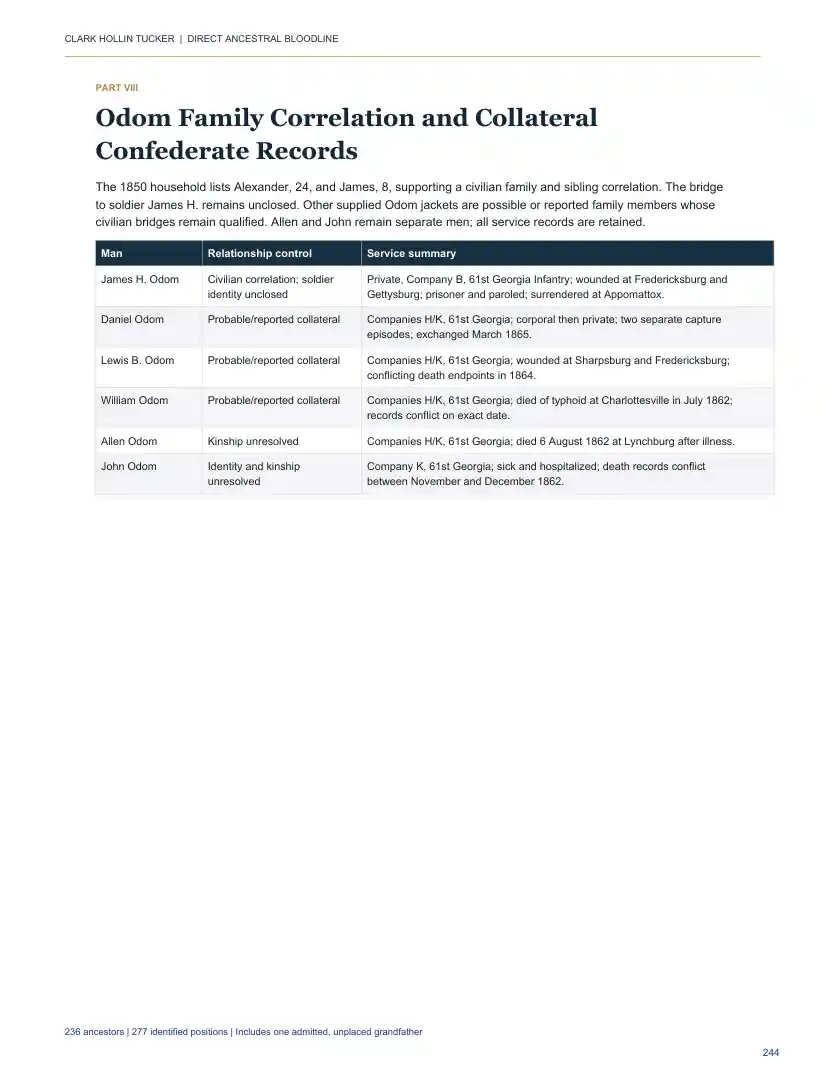
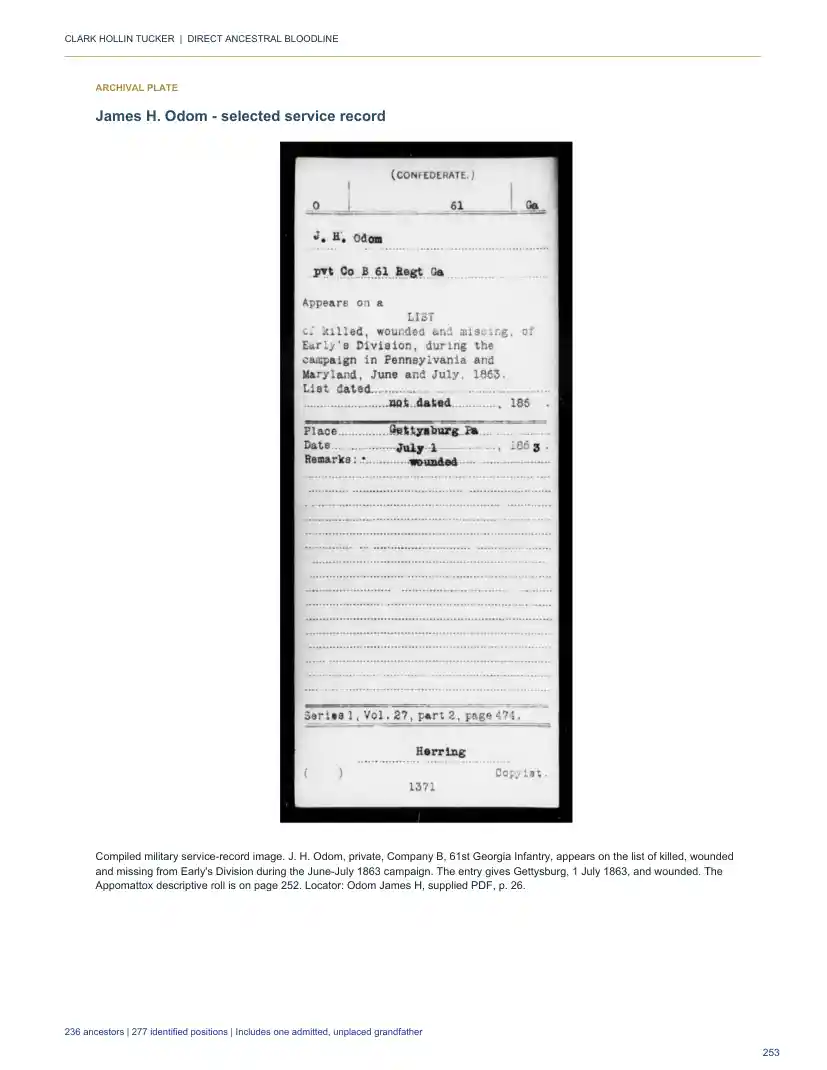
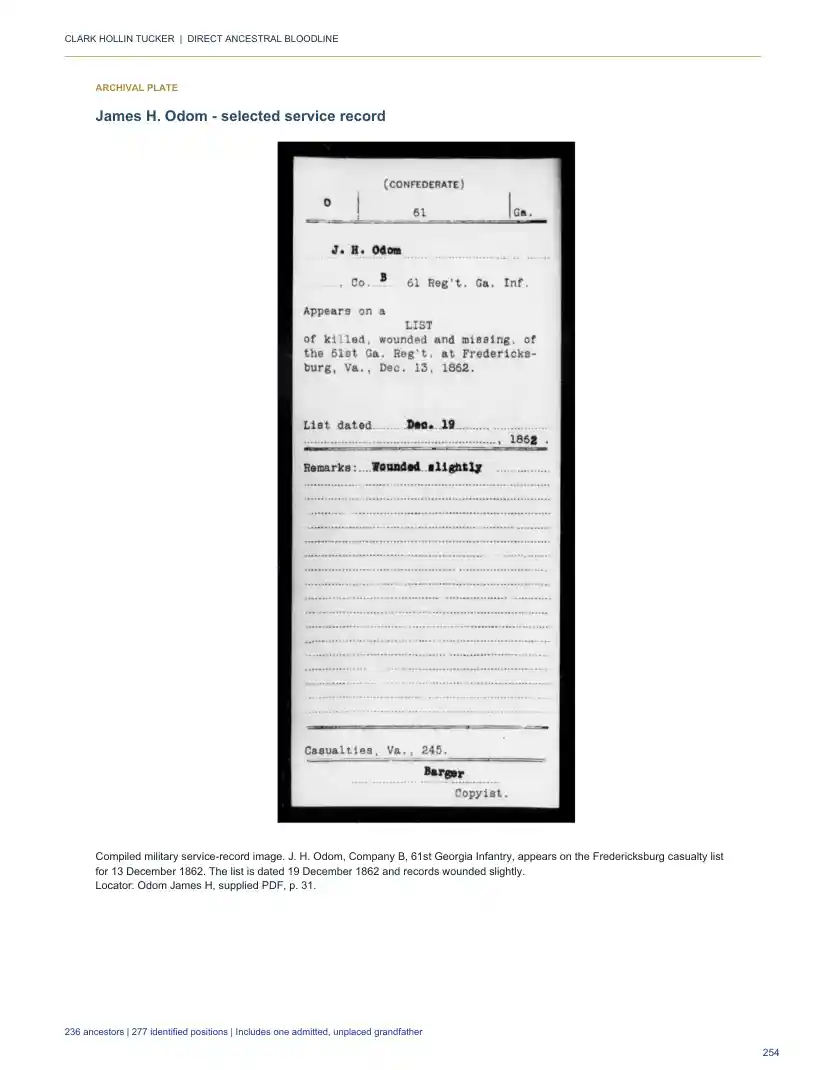
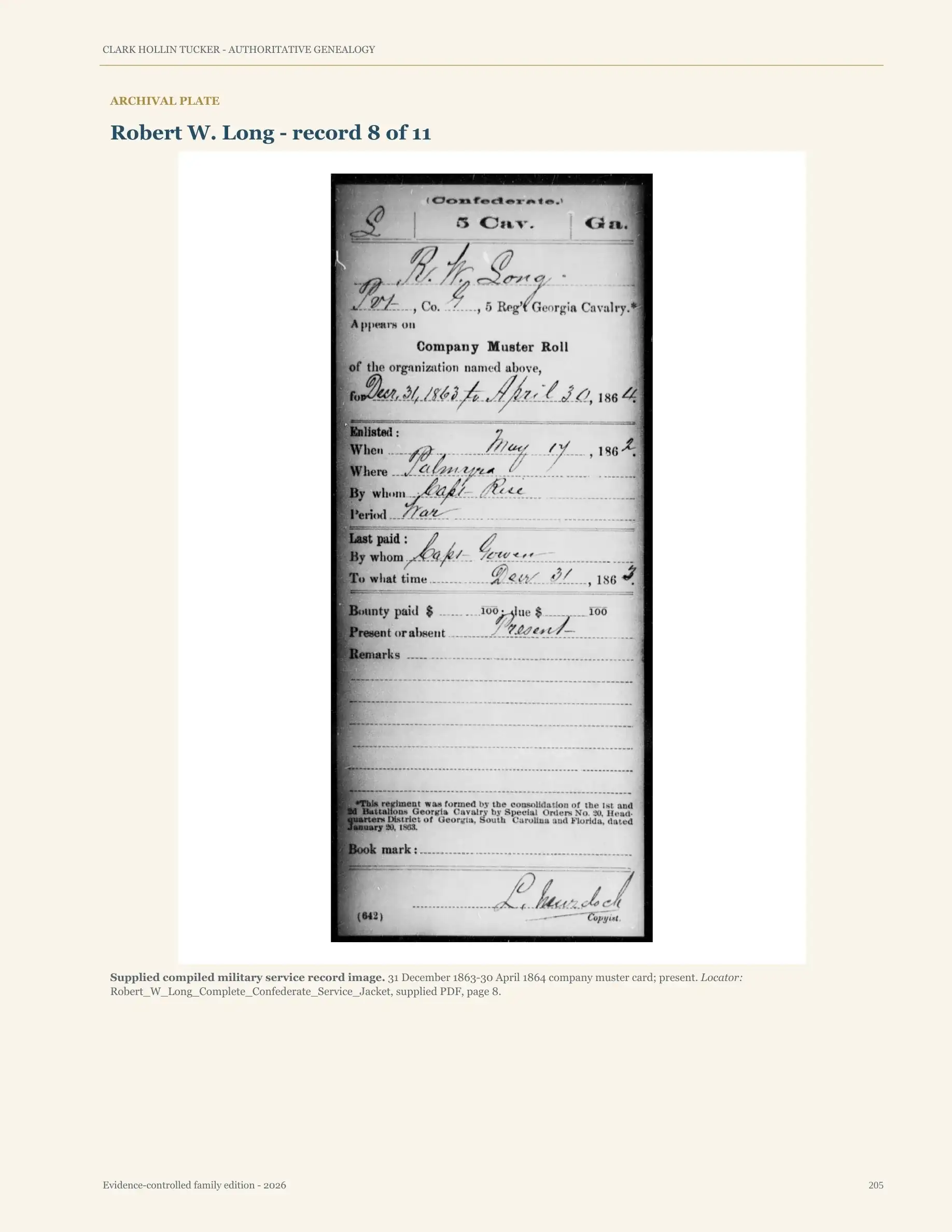
On the Georgia side, John Higgs and Robert W. Long served in the 5th Georgia Cavalry. John Higgs died in service in January 1864. Jane Brack Higgs was left a widow. Robert Long’s records carry him through the war’s closing period. The Odom, Smart and Zorn records add other parts of that experience, including illness, absence and the difficult task of distinguishing men whose names look alike.
The Shaw and Kirkland history lies especially close to home. Rebecca Kirkland Shaw is my direct ancestor. John Jackson Kirkland, remembered as “Bushwhacking John,” is my first cousin five times removed. The relationship brings his story into the family without turning a cousin into a direct ancestor.
The Shaw papers preserve wartime deaths, Rebecca’s later testimony and the efforts of neighbors to help her family survive. Kirkland’s story includes service records, accusations and court proceedings that have to be kept distinct. I have given him and the Shaw family their own illustrated history, where the documents have room to be read.
I am proud of my family. I also want to know what happened to them. That means keeping the uncomfortable pages beside the ones that are easier to celebrate.
Why I am keeping all of it
This has grown from a few pages into an archive of more than fifteen hundred. I have spent hours trying to separate two men with the same name, then found one sentence that made their lives fall into place. I have followed a promising lead that went nowhere. I have opened a manuscript and found exactly the relationship I hoped would be there.
The numbers matter because I want the work kept straight. The people matter more. Two hundred and sixteen ancestors means two hundred and sixteen lives that belong in the account, with their own evidence and their own place in the family. It includes the women whose names changed, the men whose handwriting survives, the children who lost parents and the widows who carried on.
I want someone reading this years from now to be able to follow the trail. Open the will. Look at the parish page. Read the pension testimony. See why a relationship is in the register and what still needs to be found.
And I want them to know where this began. With Mamaw Ola. With Papaw Creed. With Mamaw Hulda and Papaw Wilbur. With Tennessee homes and people I loved long before I knew about a meadow in Helmingham.
The records have taken me a long way from home. They have also shown me how much had to happen for home to exist at all.
I am grateful to God for the family I was given, and for the chance to recover this much of their story.
Christ is King.