Defense obligations before the Revolution
Nicholas Perkins Sr. #2744
Nicholas Perkins Sr. appears in the surviving published transcription of Henrico County’s 1679 equipment assessment with one tithable. His entry belongs to the grouping notified through John Millner. The assessment organized resources to equip armed men, horses and weapons during a period of frontier insecurity.
This record places Perkins within the colony’s system of defense support. It does not identify him as the man supplied, give him a military rank, or prove that he personally patrolled or fought. The name-only entry is associated with this established Henrico profile on the existing family and residence evidence. He is a different man from Nicholas Perkins of Halifax County (#686), who died in 1762.
William Giles #2750
William Giles appears as “Wm Giles” with four tithables in the 1679 Henrico equipment assessment, in the grouping notified through John Millner. His entry records a share in the county’s obligation to provide men, horses and arms for defense.
Four tithables means four taxable persons accounted for in the entry. It is not a roster of four soldiers under his command, and the list does not establish who performed the mounted service. Giles’s place in the family remains subject to the existing Harding–Perkins Grade B bridge; this assessment adds historical context without strengthening that parent-child link.
John Bowman Sr. #2352
The 1679 Henrico assessment lists “Jno Bowman” with two tithables in the grouping notified through Richard Lygon. This is the Bowman entry relevant to John Bowman Sr. (#2352), subject to the established identification of the name-only record with this family profile.
The assessment documents a defense-support obligation rather than a muster, commission or battle. It must not be reassigned to his father, Robert Bowman Sr. (#4704), who is not individually named in this list.
Robert Bowman Sr. #4704
Robert Bowman Sr. belongs to the earlier Henrico family and landholding context. The 1679 defense assessment names John Bowman, not Robert. An adjacent or associated Bowman deed can illuminate the family’s place in the county, but it cannot substitute for an assessment entry in Robert’s own name.
Sources and record types
- Frankie Liles, Henrico Historical Society, 1679 Tithe List; Henrico Record Book No. 1 (Deeds & Wills), 1677–1692, pp. 101–103. Published transcription of a contemporary record.
- Controlling master, p. 819; related retained manuscripts pp. 729 and 731. Controlling master reconciliation; Grade B.
John Pryor: magistrate, legislator and public accountant
John Pryor, Orange County testator #684
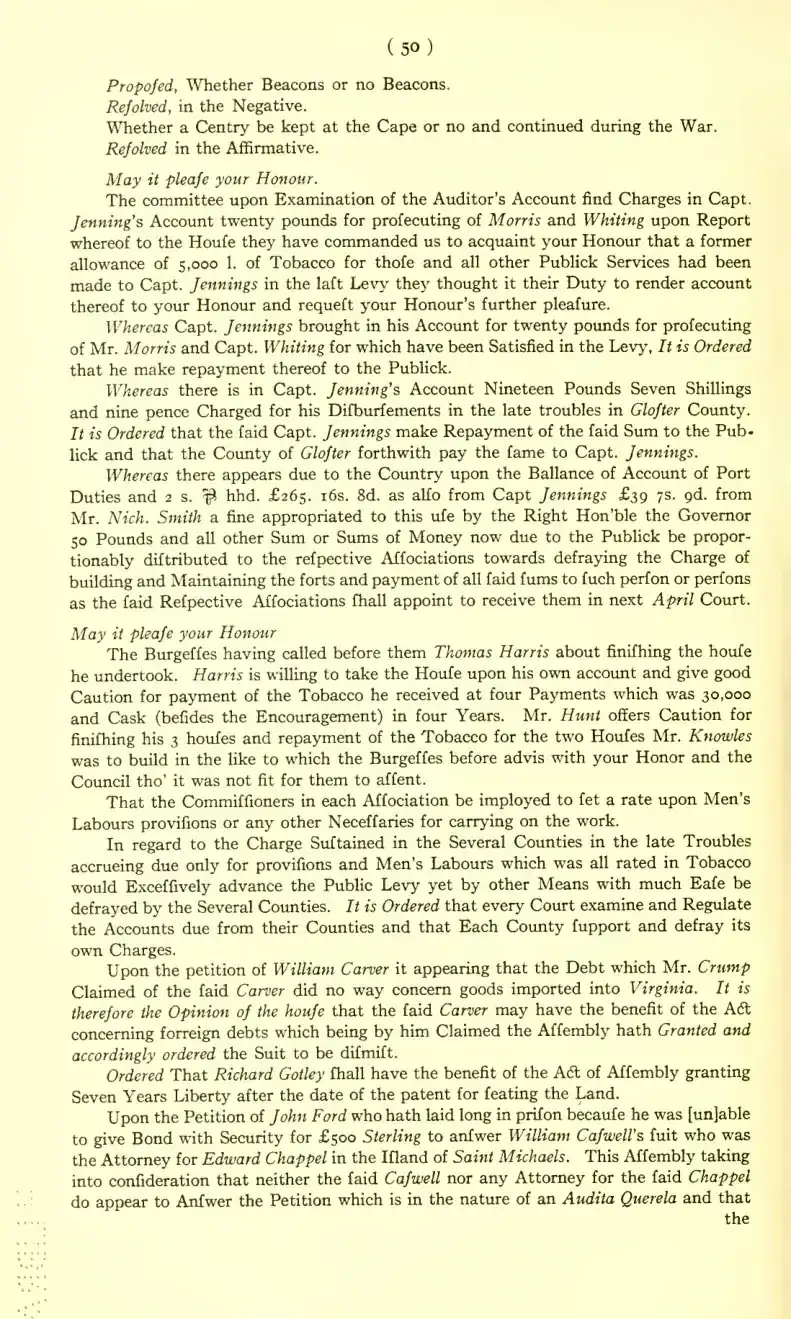
John Pryor’s public life in Orange County is documented in the colony’s civil records. At New Bern on 23 May 1757, the Governor’s Council ordered a commission and dedimus appointing John Pryor and other men as justices of the peace for Orange County. The Assembly records subsequently name him with Hermon Husband as Orange’s representatives and record his attendance and qualification by oath.
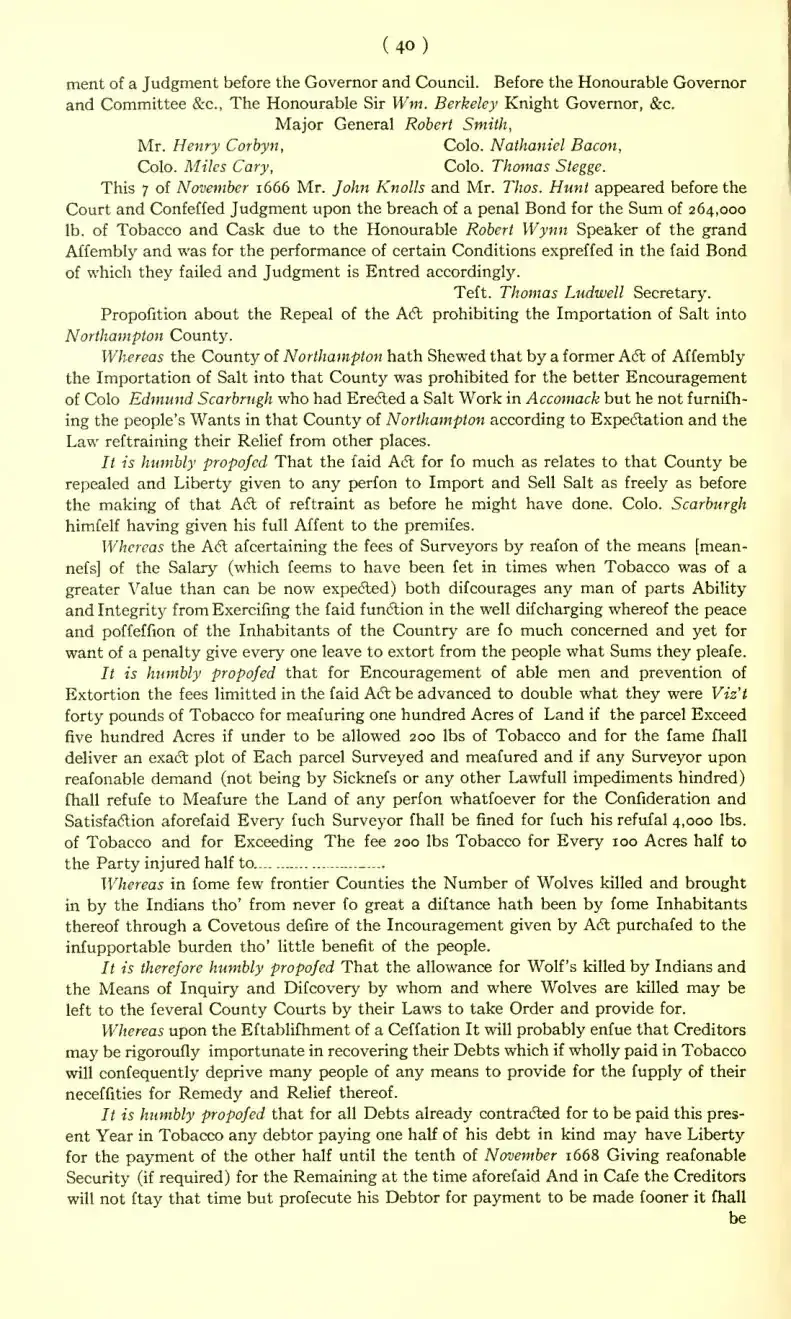
He also appears in the Regulators’ Advertisement No. 8 of 30 April 1768 as an appointed settler. These men were instructed to examine tax lists, public accounts, receipts, and the lawful fees for recording deeds and other court business. A meeting was proposed for 11 May at Thomas Lindley’s. The record establishes his appointment to that effort to settle grievances; it does not by itself establish attendance at the proposed meeting or participation in the Battle of Alamance.
The law creating Guilford County named Pryor among seven commissioners charged with locating and erecting the courthouse, prison and stocks, and marking the new county boundaries. These duties place him in the practical work of colonial government during a turbulent period.
The officeholder is associated with the Orange County testator through the existing name-and-place correlation. His civil service does not turn the family’s High B paternal link into Grade A. The will names grandson John Pryor, son of Green Pryor, and records property already delivered to Green; it does not contain the asserted literal phrase “my Son Green Pryor.” No Colonel rank is established for this man by these records.
Sources and record types
- Colonial Records of North Carolina, V:813, Governor’s Council minutes. Published contemporary Council minutes; fresh digital text inspection.
- Colonial Records of North Carolina, VIII:107 and 303; controlling master pp. 868 and 885. Original printed source plates in controlling master.
- Colonial Records of North Carolina, VII:731–732. Published contemporary minutes and instructions; fresh digital text inspection.
- State Records of North Carolina, XXIII:823–826, Laws 1770, Chapter XXIV, section XII at p. 825. Published enacted law; fresh digital text inspection.
- Controlling master, p. 819; related retained manuscripts pp. 729 and 731. Controlling master reconciliation; Grade B.
Nicholas Perkins: a home and ferry on the Dan
Nicholas Perkins #686
Nicholas Perkins helped make daily life possible along the Dan River through landholding, a ferry and a mill. In March 1757 he stood surety when Sherwood Walton acknowledged a ferry bond. In March 1759, Halifax County licensed Perkins to keep a ferry at his own house, with Theophilus Lacy as his security. The permitted charge was six pence for a man and horse, and three pence for each carriage wheel.
Published county history also identifies him as a Halifax County justice of the peace in 1759. That civil office is reported in the historical literature; the original commission has not been independently reconciled in this incorporation. The ferry record’s use of “Gent” alone is not proof of magistracy.
His will was dated 25 February 1762 and proved on 17 June. It names his wife Bethunia and daughter Susannah, and describes a family estate with specific land and mill bequests, including property associated with the Dan River and Mobleys Creek. His widow’s later deed of gift provides another direct record of her children. These documents also record enslaved people as property, part of the household’s history that should remain visible alongside its land and public activity.
Published Perkins family reconstructions identify ten children: Peter, Charles, Bethenia, Nicholas, Constant, Susannah, Anna, Mary, Thomas Hardin and Elizabeth. That family count should not be presented as a freshly verified verbatim list from the retained will: the targeted audit’s purported “my Ten Children Namely” passage differs materially from the manuscript reproduced in the controlling master. The earlier seven-child description is incomplete.
No personally documented militia enlistment, rank, fort assignment or French and Indian War combat is established for this Nicholas Perkins by the inspected sources. His colonial civil and economic history must remain separate from the Revolutionary service of younger Perkins men and from later wartime use of family properties after his death.
Sources and record types
- Halifax County Pleas Book 2:197 and 360, transcribed by Douglas Powell. Identified county-record transcription; manuscript not freshly inspected.
- Mary Carter Clement, The History of Pittsylvania County, discussion of Peter and Nicholas Perkins. Published county history; original justice commission not independently inspected.
- Halifax County Will Book 0:142–143; dated 25 February 1762, proved 17 June 1762; FamilySearch DGS 007645117, image 74. Retained original will-register image.
- Halifax County Deed Book 5; deed dated 18 September 1765; FamilySearch DGS 007898197, image 265. Page citations 471–472 and 472–473 differ between reports. Retained original deed-register image.
- William K. Hall, Descendants of Nicholas Perkins of Virginia (1957/1958); later compiled Hardin–Harding family account lists ten children. Secondary compilation; not an independent original-record proof of every child or spouse.
The Harding–Perkins connection
Bethenia Harding Perkins #687
Bethenia, recorded as Bethunia in the Halifax documents, was the wife and executrix of Nicholas Perkins. His 1762 will and her own deed of gift dated 18 September 1765 provide direct evidence of her household and children, including Susannah Perkins. The deed records transfers of enslaved people and personal property to members of the family.
Her identification as a daughter of Thomas Harding Sr. and Mary Giles remains the accepted Grade B bridge. It rests on the combined family chronology, recurring names, neighborhood and documentary associations, and published family reconstruction. Thomas Harding’s surviving will names his wife Mary, sons William and Thomas, and daughter Mary Thomas, but does not name Bethenia.
The reason for that omission cannot be read out of the will. Proposed explanations involving prior provision or younger children remain interpretations. Nor does a witness-fee order for Nicholas Pirkins state Bethenia’s parentage or prove her personal appearance in court. These limitations preserve the distinction between a coherent, admitted lineage and an explicit parent-child statement.
Thomas Harding Sr. #1374
Thomas Harding Sr.’s recorded will identifies sons William and Thomas, daughter Mary Thomas, and his wife Mary as sole executrix. Its land bequests place the family around Tuckahoe Creek and Hardings Branch. Mary Thomas received land and an enslaved boy as part of her portion.
The will does not name Bethenia Perkins. Her accepted connection to Thomas and Mary rests on the Grade B reconstruction preserved in the controlling master. The targeted audit’s changed day and register-page citations are not adopted as settled corrections: the retained manuscript and prior references must be reconciled before using an exact day or silently replacing the citation.
Mary Giles Harding Hughes #1375
Mary Giles Harding Hughes connects the Giles and Harding households in the accepted colonial line. The surviving Harding will names Mary as wife and sole executrix. A published abstract of the 8 October 1747 Henrico deed records Thomas Hughes and Mary his wife releasing her dower interest in the Hardings Branch land formerly held by Thomas Harding and devised to his sons.
That record supports the widow’s continuing connection to Harding family land. It does not expressly identify Bethenia Perkins as her daughter. The mother-daughter bridge remains Grade B, and the stronger records for earlier Giles and Knowles relationships do not remove that qualification.
Sources and record types
- Halifax County Will Book 0:142–143; dated 25 February 1762, proved 17 June 1762; FamilySearch DGS 007645117, image 74. Retained original will-register image.
- Halifax County Deed Book 5; deed dated 18 September 1765; FamilySearch DGS 007898197, image 265. Page citations 471–472 and 472–473 differ between reports. Retained original deed-register image.
- Henrico Wills & Deeds 1725–1737; FamilySearch DGS 007645095, image 335; controlling master pp. 729 and 819. The master cites register p. 301; targeted audit cites p. 294. Retained original register image; day and page citations require reconciliation.
- Controlling master, p. 819; related retained manuscripts pp. 729 and 731. Controlling master reconciliation; Grade B.
- Henrico Wills & Deeds 1744–1748:335, 8 October 1747, as abstracted in published genealogical sources and retained in master p. 819. Published abstract; not a newly inspected manuscript.