15 NOVEMBER 2026 · GENERATION 10 · HUGUENOT HOMECOMING
Daniel and Mary Fore. A family recovered in court.
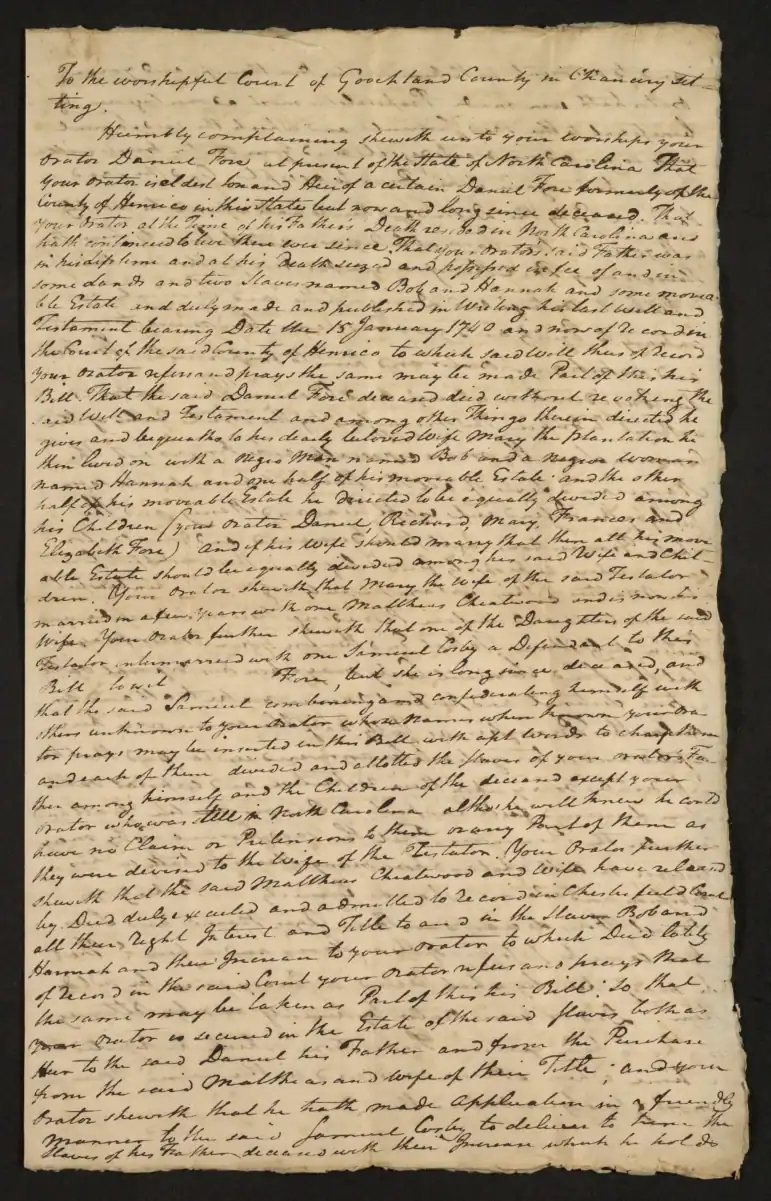
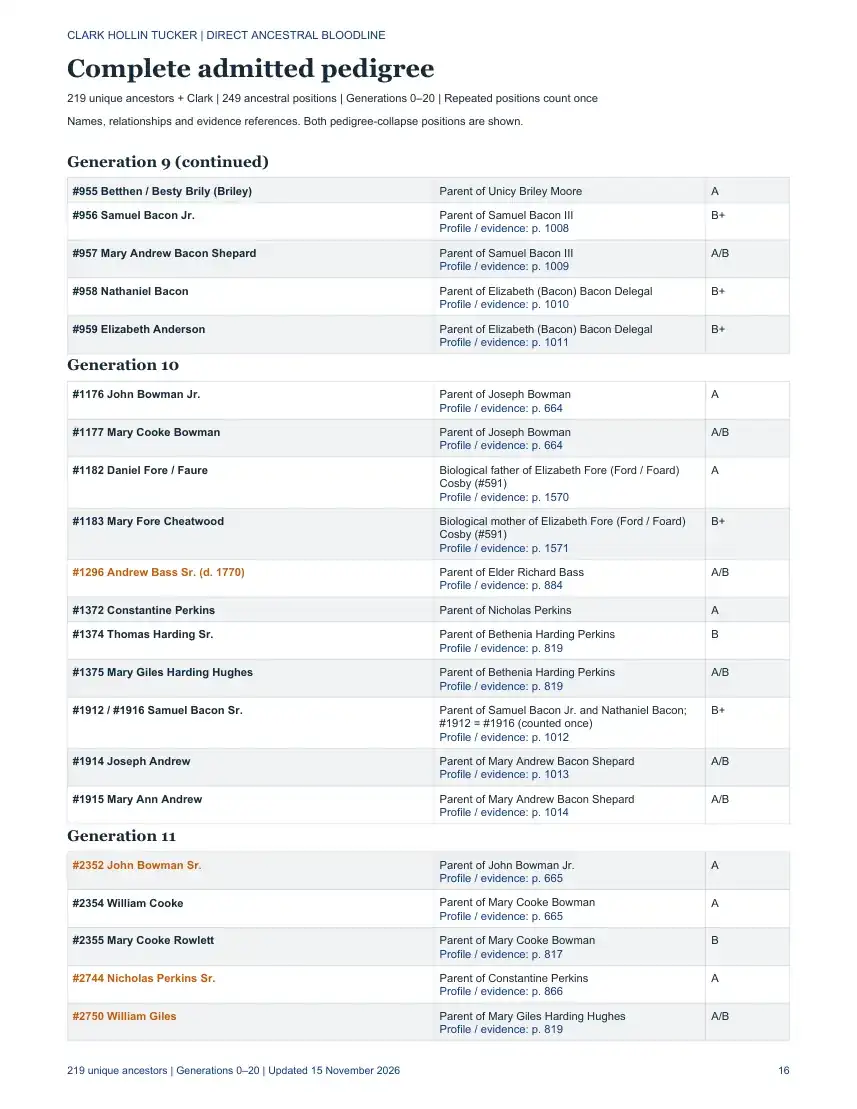
An estate dispute preserved the names and relationships of the Fore family long after Daniel’s death. Its opposing pleadings and sworn testimony identify the parents of Elizabeth Fore Cosby, carrying this branch back one more generation.
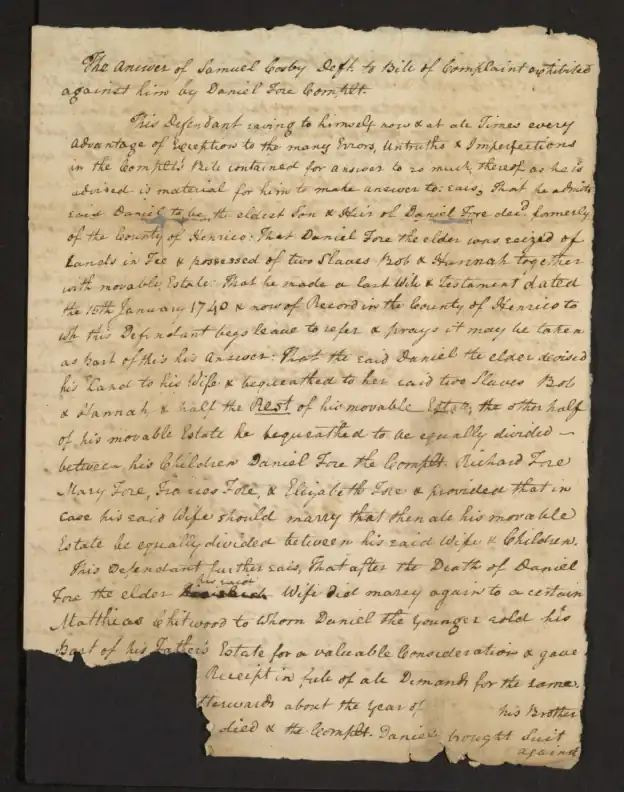
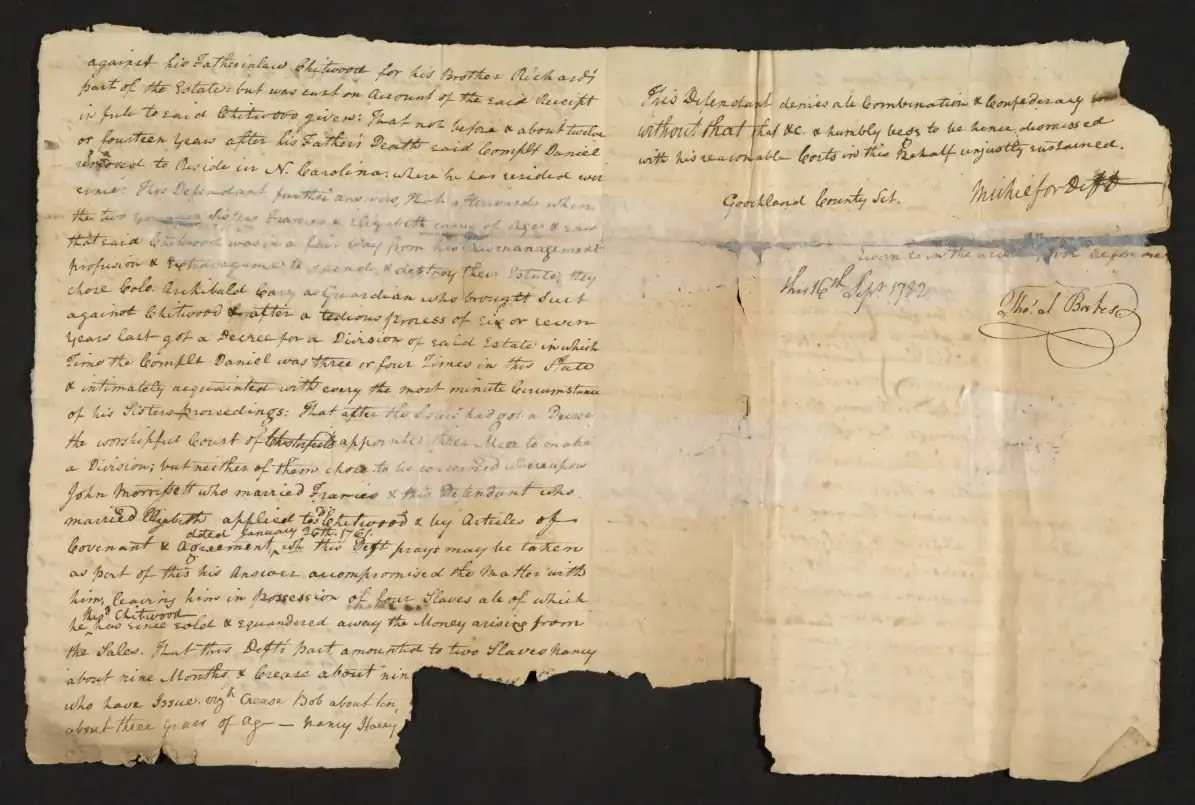
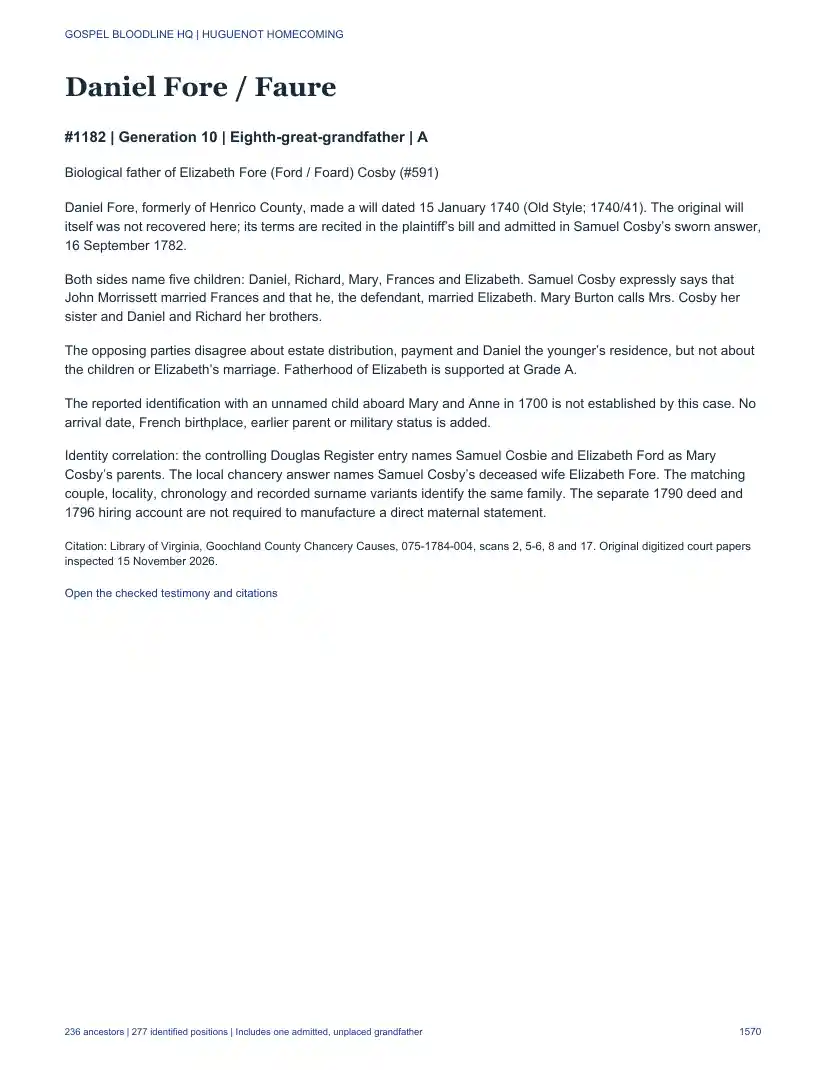
Daniel Fore, formerly of Henrico County, made a will dated 15 January 1740 (Old Style; 1740/41). The original will itself was not recovered here; its terms are recited in the plaintiff’s bill and admitted in Samuel Cosby’s sworn answer, 16 September 1782.
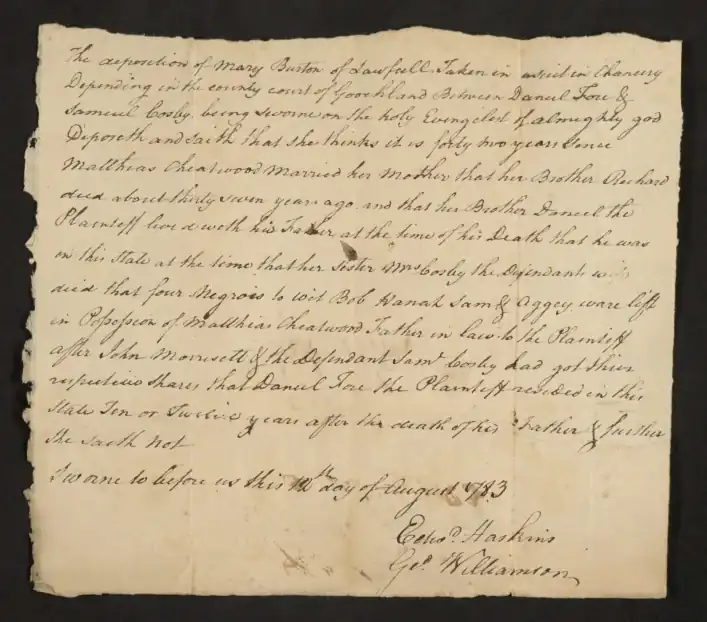
Both sides name five children: Daniel, Richard, Mary, Frances and Elizabeth. Samuel Cosby expressly says that John Morrissett married Frances and that he, the defendant, married Elizabeth. Mary Burton calls Mrs. Cosby her sister and Daniel and Richard her brothers.
The opposing parties disagree about estate distribution, payment and Daniel the younger’s residence, but not about the children or Elizabeth’s marriage. Fatherhood of Elizabeth is supported at Grade A.
The reported identification with an unnamed child aboard Mary and Anne in 1700 is not established by this case. No arrival date, French birthplace, earlier parent or military status is added.
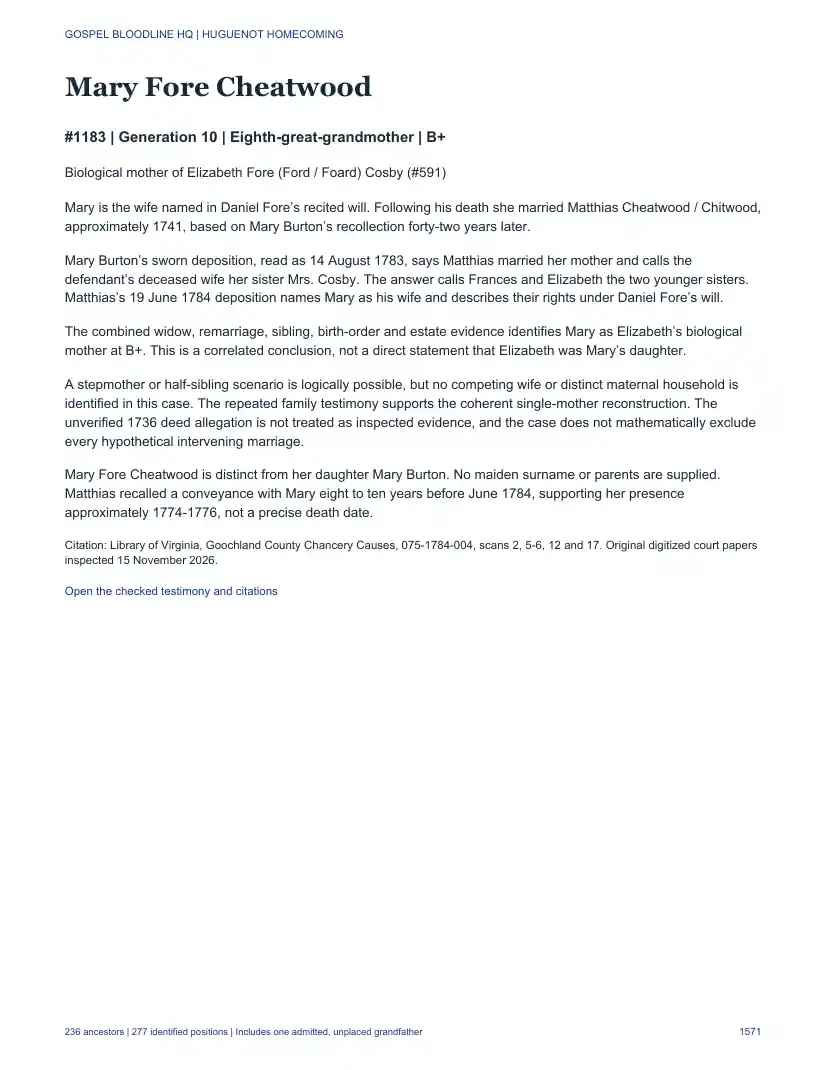
Mary is the wife named in Daniel Fore’s recited will. Following his death she married Matthias Cheatwood / Chitwood, approximately 1741, based on Mary Burton’s recollection forty-two years later.
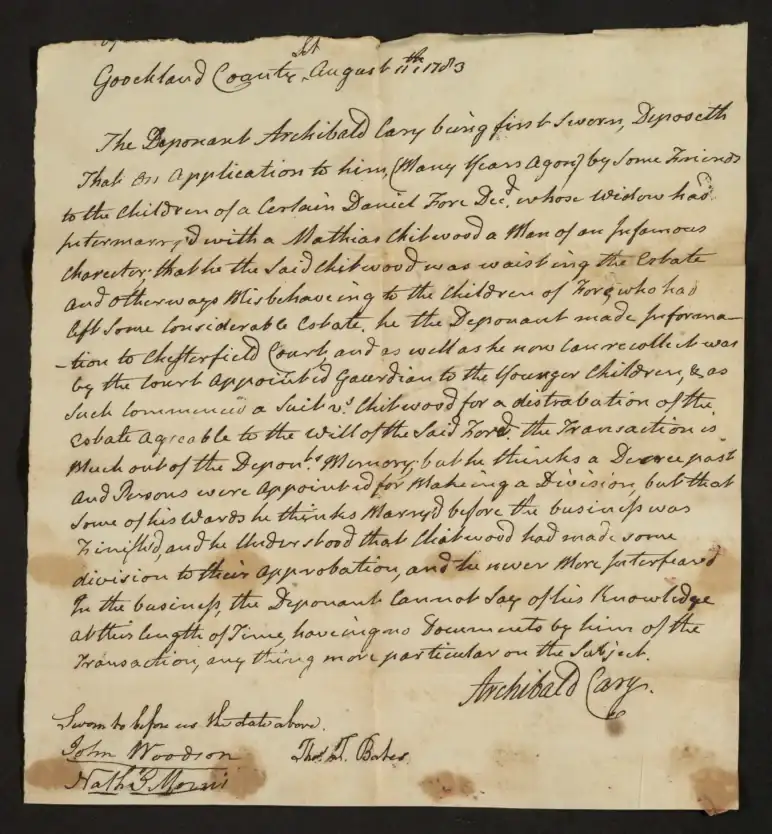
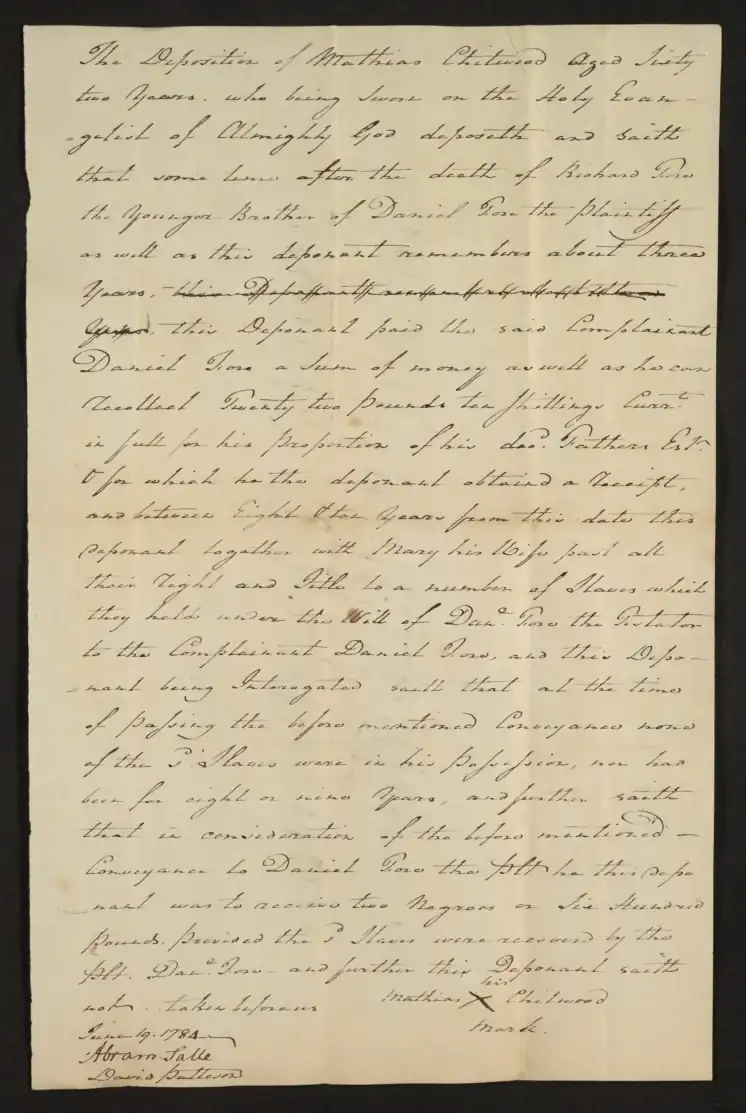
Mary Burton’s sworn deposition, read as 14 August 1783, says Matthias married her mother and calls the defendant’s deceased wife her sister Mrs. Cosby. The answer calls Frances and Elizabeth the two younger sisters. Matthias’s 19 June 1784 deposition names Mary as his wife and describes their rights under Daniel Fore’s will.
The combined widow, remarriage, sibling, birth-order and estate evidence identifies Mary as Elizabeth’s biological mother at B+. This is a correlated conclusion, not a direct statement that Elizabeth was Mary’s daughter.
A stepmother or half-sibling scenario is logically possible, but no competing wife or distinct maternal household is identified in this case. The repeated family testimony supports the coherent single-mother reconstruction. The unverified 1736 deed allegation is not treated as inspected evidence, and the case does not mathematically exclude every hypothetical intervening marriage.
Mary Fore Cheatwood is distinct from her daughter Mary Burton. No maiden surname or parents are supplied. Matthias recalled a conveyance with Mary eight to ten years before June 1784, supporting her presence approximately 1774-1776, not a precise death date.
The Douglas Register names Samuel Cosbie and Elizabeth Ford as parents of Mary Cosby Bowman. The chancery answer identifies Elizabeth Fore as Daniel’s daughter and Samuel Cosby’s wife. Recorded surname variants remain attached to one woman; no duplicate ancestor is created.
The excerpts below are selected reading transcriptions, with line breaks normalized and omissions marked. The full original case remains available above.
The father’s will, recited in the bill
“his dearly beloved Wife Mary” ... “his Children (your Orator Daniel, Richard, Mary, Frances and Elizabeth Fore)”
Daniel’s will is dated 15 January 1740 in the later court recitals, conventionally 1740/41. His widow’s remarriage about 1741 and Richard’s death about 1746 are estimates derived from Mary Burton’s recollections. Her deposition is read as 14 August 1783, correcting the earlier report’s 12 August reading.
Fatherhood is explicit. Maternity is correlated at B+: the evidence identifies the named widow and remarried mother within the sibling group. It does not contain a direct statement that Elizabeth was Mary’s daughter. The alleged 1736 deed and the 1700 passenger identity are not presented as verified originals.
The full case includes the family’s conflicting accounts of estate settlement, residence and payment. The parties agree on the family relationships. Enslaved people named in the papers are preserved in the source record; repeated given names across later transactions are not automatically treated as one individual.